


What's Happening?
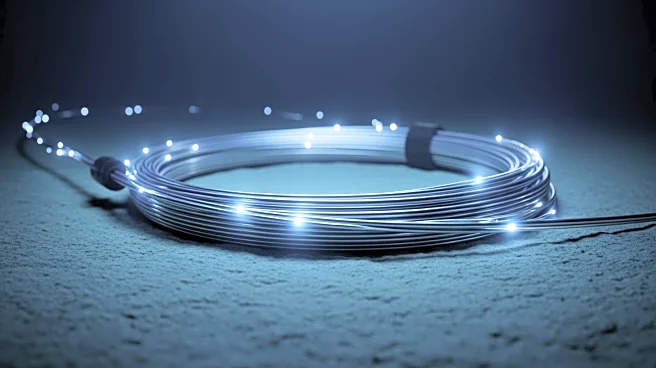
A new study by researchers from the UAE, Canada, Japan, and Taiwan examines the security risks to subsea cables, which are critical for global communications. The study identifies that the risk to these cables increases during periods of geopolitical
tension, particularly in 'gray zone' phases between peace and conflict. These phases allow for actions like sabotage that disrupt communications without triggering direct retaliation. The study highlights that cable landing sites are particularly vulnerable, especially in territorial seas and exclusive economic zones (EEZs), where sabotage is easier due to shallow waters. The researchers propose a six-point policy framework to enhance cable security, including scenario-based security postures and regional cooperation.
Why It's Important?
Subsea cables are vital for global internet and communication networks, and their security is crucial for economic stability and national security. The study's findings underscore the need for enhanced protection measures as geopolitical tensions rise, particularly in regions with significant strategic interests. The vulnerability of these cables could lead to disruptions in communication, affecting businesses, governments, and individuals worldwide. The proposed policy framework aims to mitigate these risks by improving early warning systems and fostering international cooperation to protect these critical infrastructures.
Beyond the Headlines
The study reveals deeper implications for international security and the potential for conflict in the digital age. As countries become more reliant on digital infrastructure, the security of subsea cables becomes a matter of national security. The study suggests that during times of tension, states may use cable sabotage as a tool for strategic advantage, highlighting the need for robust international agreements and protocols to prevent such actions. The findings also emphasize the importance of public-private partnerships in securing these infrastructures, as private companies often own and operate the cables.