





What's Happening?
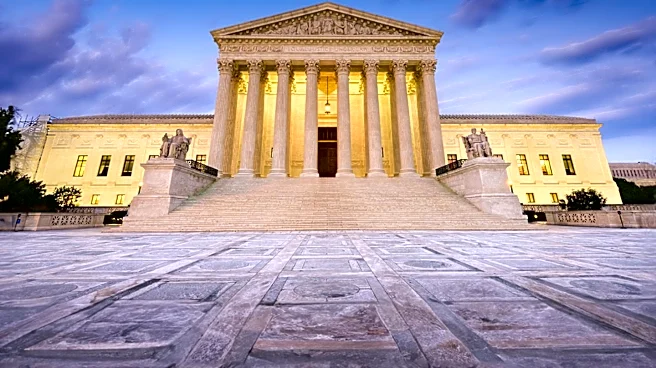
The NRA Institute for Legislative Action (NRA-ILA) has submitted an amicus brief to the U.S. Supreme Court in the consolidated cases of *Viramontes v. Cook County* and *Grant v. Higgins*. These cases challenge 'assault-weapons' bans in Cook County, Illinois,
and Connecticut. The brief, co-authored by Joe Greenlee, director of the Office of Litigation Counsel at NRA-ILA, aims to counter the argument that modern semi-automatic firearms represent a 'dramatic technological change' that the Founding Fathers could not have envisioned. The NRA-ILA's brief traces the history of repeating arms from approximately 1490 to demonstrate that modern semi-automatic rifles are not a sudden innovation but rather the culmination of five centuries of incremental advancements in firearm technology. This historical context is intended to reinforce the argument that the Second Amendment, as interpreted by the Supreme Court in *Heller* (2008) and *Bruen* (2022), protects arms in common use, including semi-automatics.
Why It's Important?
This amicus brief is crucial because it directly addresses a key argument used by gun-control advocates and lower courts to justify restrictions on semi-automatic firearms. By presenting a detailed historical account of repeating arms, the NRA-ILA seeks to persuade the Supreme Court that such firearms are not a novel invention outside the scope of Second Amendment protections. The Supreme Court's previous rulings in *Heller* and *Bruen* established that the Second Amendment protects arms in common use and requires firearm regulations to align with historical tradition. If the Court accepts the NRA-ILA's historical narrative, it could significantly undermine the legal basis for 'assault-weapons' bans and other restrictions on semi-automatic firearms, potentially leading to their invalidation. This would have far-reaching implications for gun control legislation across the United States, impacting both gun owners and public safety policies.
What's Next?
The U.S. Supreme Court will consider the arguments presented in the NRA-ILA's amicus brief as it reviews the *Viramontes v. Cook County* and *Grant v. Higgins* cases. The Court's decision will hinge on its interpretation of the Second Amendment in light of historical firearm development and the 'common use' standard. A ruling in favor of the challengers could lead to the overturning of existing 'assault-weapons' bans in Illinois and Connecticut, and potentially set a precedent that could invalidate similar laws in other states. Conversely, if the Court upholds the bans, it would reinforce the ability of states and localities to regulate certain types of firearms. The outcome will significantly influence the ongoing legal and political debate surrounding gun control in the United States, with potential ripple effects on future legislative efforts and judicial challenges.
Beyond the Headlines
The NRA-ILA's brief delves into a deeper philosophical and historical debate about the Second Amendment's applicability to modern weaponry. By emphasizing the continuous evolution of firearm technology, it challenges the notion that the Second Amendment is limited to firearms contemporary to the Founding era. This argument touches upon the concept of 'originalism' in constitutional interpretation, specifically how historical context should inform the understanding of contemporary rights. The brief also highlights a persistent tension between judicial interpretation and legislative intent in gun control. If the Supreme Court adopts the NRA-ILA's historical perspective, it could solidify a broad interpretation of the Second Amendment, potentially limiting the scope of future gun control legislation. This would not only impact legal frameworks but also fuel the broader cultural and political discourse on gun rights and public safety in America.