



What's Happening?
Cyclone Ditwah has caused catastrophic flooding and landslides in Sri Lanka, particularly affecting tea plantation workers in the central hilly regions. The disaster has resulted in over 640 deaths and left more than a hundred people missing. Many tea workers,
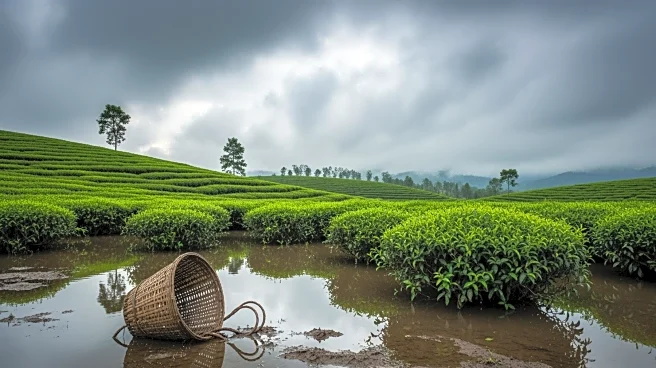
who live in precarious conditions in old colonial-era housing, have lost their homes and family members. The cyclone's impact has been severe due to the workers' residences being located on vulnerable mountain slopes, while the tea plantations themselves, situated on flatter ground, were less affected. The government has promised compensation and is negotiating with tea companies to find safer lands for rebuilding homes.
Why It's Important?
The disaster highlights the vulnerability of Sri Lanka's tea plantation workers, who are already living in poverty with limited access to basic services. The cyclone has exacerbated their plight, underscoring the need for improved living conditions and disaster preparedness. The situation also reflects broader challenges faced by Sri Lanka, including economic constraints and climate change impacts. The country's significant debt burden limits its ability to invest in climate resilience and infrastructure improvements, making it difficult to protect its population from future extreme weather events.
What's Next?
The Sri Lankan government is working on compensation packages and plans to build new homes for those affected by the cyclone. An Indian-assisted project aims to provide 7,000 homes as part of the initial response. However, the urgency of the situation demands swift action to ensure the safety and well-being of displaced workers. The government and tea companies must collaborate to secure safer living conditions and address the long-term needs of the affected communities.
Beyond the Headlines
The disaster exposes systemic issues in Sri Lanka, where economic pressures and climate vulnerability intersect. The country's reliance on tourism and its debt obligations hinder its ability to prioritize climate adaptation and disaster risk reduction. This situation calls for a reevaluation of development priorities, emphasizing the need for sustainable and resilient infrastructure to protect vulnerable populations from future climate-related disasters.