



What's Happening?
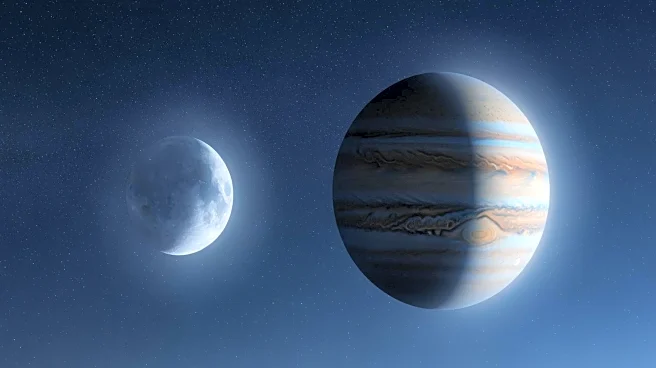
Jupiter, one of the brightest celestial bodies in the night sky, is currently in its synodic period, a phenomenon that occurs approximately every 13 months. During this period, Earth is positioned directly between the sun and Jupiter, reducing solar glare
and making the planet appear brighter and larger. This alignment began on January 10, 2026, and will maintain favorable visibility until late January. As both Jupiter and Earth continue their orbital paths, the planet will gradually move away, and by mid-April, solar glare will make it appear smaller and less bright. Jupiter will not enter its synodic period again until February 2027. To observe Jupiter, stargazers should look for a bright, pale yellow dot in the night sky, which will be the brightest object aside from the moon. The best time to view it is around mid-evening when it is highest in the sky.
Why It's Important?
The synodic period of Jupiter offers a unique opportunity for astronomers and stargazers to observe the planet in greater detail. This event enhances public interest in astronomy and provides educational opportunities for schools and science enthusiasts. The increased visibility of Jupiter can also inspire amateur astronomers to engage more deeply with the study of celestial bodies. Additionally, such astronomical events can boost tourism in areas with observatories or clear night skies, as people may travel to these locations to get a better view of the planet. The event underscores the importance of astronomy in understanding our solar system and the dynamics of planetary movements.
What's Next?
As Jupiter continues its path, the visibility will decrease, and by mid-April, the planet will be less prominent in the night sky. Astronomers and enthusiasts will likely continue to track Jupiter's movements and prepare for its next synodic period in February 2027. In the meantime, educational institutions and observatories may organize events and workshops to capitalize on the current visibility, fostering a greater appreciation for astronomy. The event may also prompt discussions on the importance of preserving dark skies and reducing light pollution to enhance astronomical observations.