


What's Happening?
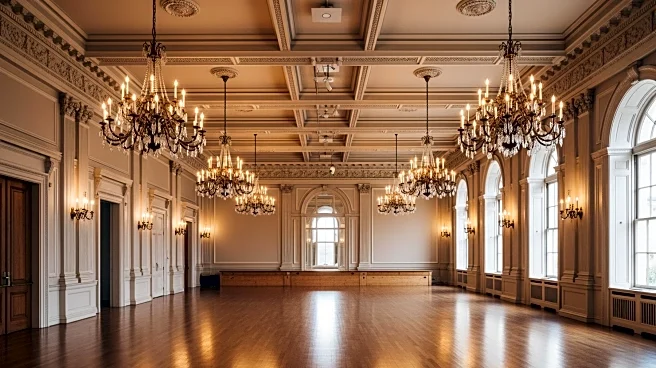
President Trump is moving forward with the construction of a new White House ballroom, despite facing legal challenges from a top historical preservation group. The project, which aims to create an 89,000-square-foot event space, has been criticized for lacking
express authorization from Congress. A federal judge has expressed skepticism about Trump's authority to proceed without this approval. Nevertheless, Trump has stated that the construction is ahead of schedule and within budget, with the White House confirming that the ballroom will be privately funded. The project has attracted private donors, including major companies like Apple, Amazon, and Microsoft. The National Capital Planning Commission, which must approve the project, is set to discuss the proposal in an upcoming meeting.
Why It's Important?
The construction of the White House ballroom is significant as it represents a major alteration to a historic site, raising concerns about preservation and the legal processes involved in such developments. The project highlights the tension between modernizing government facilities and maintaining historical integrity. If completed, the ballroom could shift the location of future presidential inaugurations, traditionally held at the US Capitol, to the White House. This move could have implications for the ceremonial aspects of U.S. presidential transitions. Additionally, the involvement of major corporations as private donors underscores the intersection of politics and business interests in public projects.
What's Next?
The National Capital Planning Commission is scheduled to meet on March 5 to discuss the ballroom proposal. This meeting will be crucial in determining whether the project receives the necessary approvals to continue. The outcome could influence future decisions on similar projects involving federal land and historical sites. Stakeholders, including historical preservationists and political figures, are likely to continue debating the project's merits and legality. The decision could set a precedent for how such projects are handled in the future, particularly regarding the balance between modernization and preservation.