






What's Happening?
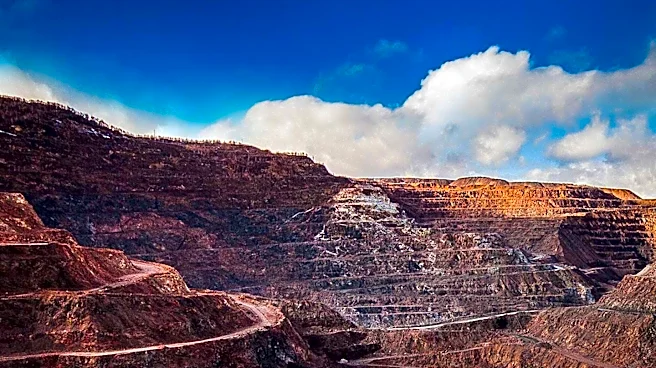
An investigation by Lighthouse Reports, The Financial Times, and Le Monde has raised concerns about the presence of uranium in cobalt shipments from the Democratic Republic of Congo (DRC) to China. The investigation, based on a confidential International
Atomic Energy Agency memo, suggests that uranium is present in significant quantities in cobalt ores from Katanga, DRC. The Chinese mining group CMOC, which owns the main site examined, disputes these findings. The investigation estimates that between 2,000 and 5,000 tonnes of uranium were exported from the DRC to China between 2000 and 2024, potentially enough to fuel a nuclear reactor for a decade.
Why It's Important?
The presence of uranium in cobalt shipments has significant implications for global nuclear security and environmental safety. If uranium is being exported without proper oversight, it could pose a risk of proliferation or environmental contamination. The findings could lead to increased scrutiny of mining practices in the DRC and the regulatory frameworks governing mineral exports. This situation also highlights the complex interplay between resource extraction and international security, as well as the need for robust monitoring mechanisms to prevent the illicit trade of nuclear materials.
Beyond the Headlines
The investigation underscores the challenges faced by resource-rich countries like the DRC in managing their natural resources responsibly. The potential for uranium extraction from cobalt ores raises questions about the adequacy of current regulatory measures and the capacity of local authorities to enforce them. This situation also reflects broader geopolitical dynamics, as countries compete for access to critical minerals essential for modern technologies. The findings may prompt calls for international cooperation to ensure that mineral extraction does not compromise global security or environmental standards.