
What's Happening?
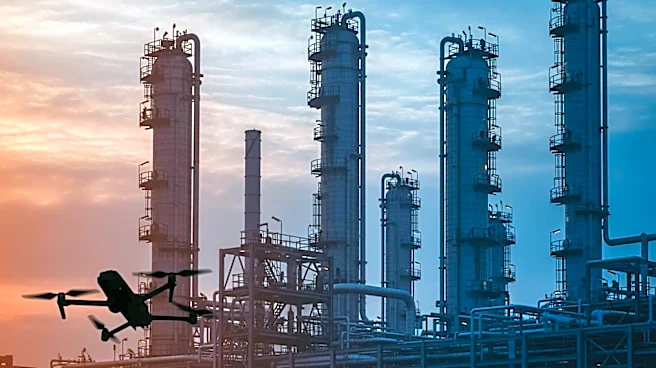
Kuwait is actively addressing the aftermath of a drone strike on the Mina Al Ahmadi refinery, a critical component of its oil infrastructure. The attack, part of ongoing regional hostilities involving Iran, resulted in fires across several operational
units. Emergency crews swiftly contained the fires, ensuring no injuries occurred and implementing precautionary measures to safeguard workers and infrastructure. The refinery, located approximately 40 kilometers south of Kuwait City, is integral to Kuwait's energy sector, processing up to 466,000 barrels per day into essential fuels for domestic and international markets. Despite the attack, Kuwait Petroleum Corporation is maintaining high safety standards and operational continuity. Environmental regulators are monitoring air quality, with no adverse effects reported. The National Guard has dismissed rumors of radioactive leaks, emphasizing continuous monitoring to ensure public safety.
Why It's Important?
The drone strike on Kuwait's Mina Al Ahmadi refinery underscores the vulnerability of critical energy infrastructure in the Gulf region amid escalating tensions with Iran. As a major oil exporter, Kuwait's ability to maintain uninterrupted operations at its refineries is crucial for both its economy and global energy markets. The incident highlights the broader geopolitical risks affecting energy security in the region, potentially impacting oil prices and international trade. Kuwait's swift response and commitment to safety standards are vital in mitigating the immediate effects of such attacks. The ongoing conflict poses challenges for regional stability, with potential repercussions for international relations and economic partnerships.
What's Next?
Kuwait is likely to enhance its security measures around key energy infrastructure to prevent future attacks. Coordination with environmental and safety regulators will continue to ensure operational safety and public health. The regional conflict may prompt increased diplomatic efforts to de-escalate tensions and protect critical assets. Stakeholders, including international energy markets and political leaders, will closely monitor developments, potentially influencing policy decisions and strategic alliances. Kuwait's response may serve as a model for other Gulf countries facing similar threats.
Beyond the Headlines
The attack on Kuwait's refinery may lead to discussions on the ethical implications of targeting civilian infrastructure during conflicts. It raises questions about the legal frameworks governing such actions and the responsibilities of state actors in protecting non-combatant assets. The incident could also prompt long-term shifts in energy security strategies, including investments in technology to detect and neutralize threats. Cultural dimensions, such as public perception and resilience in the face of adversity, may influence national narratives and international diplomacy.