



What's Happening?
The Israeli security cabinet is expected to approve the reopening of the Rafah crossing on the Egypt-Gaza border, despite ongoing concerns about the return of Sgt. First Class Ran Gvili, a hostage held in Gaza. This decision comes amid significant international
pressure, particularly from the United States, as part of Phase 2 of President Trump's plan for Gaza. Prime Minister Benjamin Netanyahu and several ministers have previously opposed reopening the crossing, citing security concerns and the potential for Hamas to use it as a rearmament route. However, recent discussions between U.S. envoys, including Special Envoy Steve Witkoff and Jared Kushner, and Israeli officials have focused on advancing the plan, which includes reopening the crossing. The Gvili family has appealed to the Israeli government to prioritize the return of their son before proceeding with the reopening.
Why It's Important?
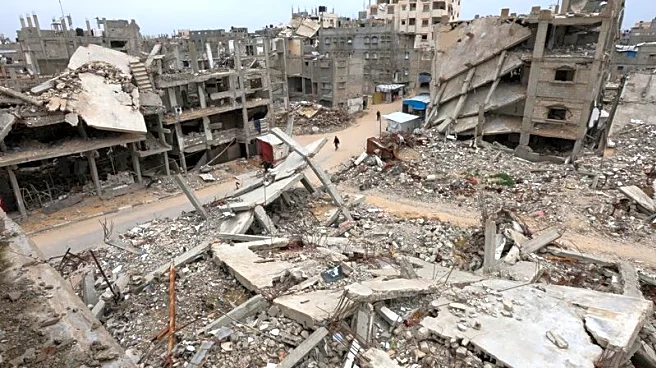
The reopening of the Rafah crossing is a critical component of broader efforts to stabilize the region and facilitate reconstruction in Gaza. The decision reflects the influence of international diplomacy, particularly from the United States, in shaping Israeli policy. The move is seen as a step towards implementing a two-state solution and improving relations between Israel and its neighbors. However, it also highlights the tension between security concerns and diplomatic objectives, as Israel must balance its commitment to recovering hostages with international expectations. The outcome of this decision could impact regional stability and the future of Israeli-Palestinian relations, with potential implications for U.S. foreign policy in the Middle East.
What's Next?
The Israeli cabinet's decision on the Rafah crossing will likely lead to further diplomatic engagements between the U.S., Israel, and other regional stakeholders. If the crossing is reopened, it could pave the way for increased humanitarian aid and economic activity in Gaza, potentially easing tensions. However, the unresolved issue of hostages, including Ran Gvili, remains a significant obstacle. The Israeli government may face domestic pressure to ensure the safe return of hostages, which could complicate diplomatic efforts. Additionally, the involvement of Palestinian Authority personnel in managing the crossing may lead to further negotiations regarding their role and influence in Gaza.