







What's Happening?
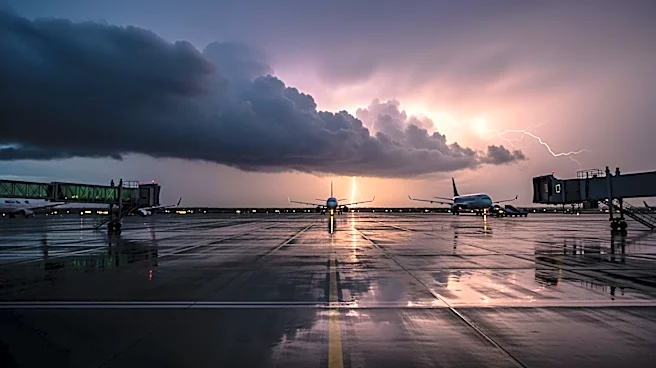
Severe spring storms combined with a high number of Easter holiday travelers led to widespread disruption across U.S. air travel over the holiday weekend. Tens of thousands of flights were delayed, and over 2,000 cancellations were recorded nationwide
between Thursday and Saturday. FlightAware data indicates that the United States experienced more than 15,000 flight delays between April 2 and April 4, including over 6,000 delays and nearly 500 cancellations on Easter Saturday alone. Major airports in the Midwest, South, and Southeast were heavily affected, with Chicago O'Hare International Airport canceling more than 800 flights on Thursday due to FAA ground stops caused by storms. Dallas/Fort Worth International Airport and Houston's George Bush Intercontinental Airport also faced significant disruptions. Airlines and passengers experienced ripple effects, with missed connections and crowded terminals reported.
Why It's Important?
The flight disruptions during the Easter weekend highlight the vulnerability of air travel to severe weather conditions, especially during peak travel periods. The impact on major hub airports like Chicago O'Hare and Dallas/Fort Worth underscores the interconnected nature of airline operations, where delays at one hub can quickly affect national networks. This situation affects airlines' operational efficiency and passenger satisfaction, potentially leading to financial losses and reputational damage. The disruptions also stress the importance of robust contingency planning and communication strategies by airlines to manage such events effectively. Passengers face inconvenience and potential financial losses due to missed connections and extended wait times.
What's Next?
As the strongest storm activity has dissipated, airlines expect smoother operations heading into Easter Monday. However, travelers are advised to continue monitoring their flight status closely and arrive at airports earlier than usual due to lingering congestion. Airlines may need to reassess their contingency plans and improve communication with passengers to mitigate the impact of future disruptions. The FAA and airport authorities might also consider reviewing their protocols for handling severe weather events to minimize operational disruptions.