
What's Happening?
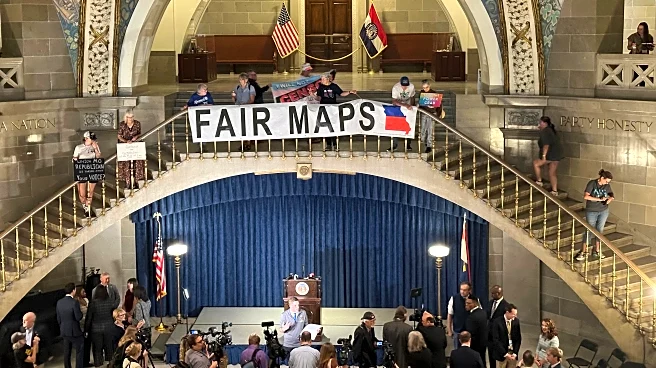
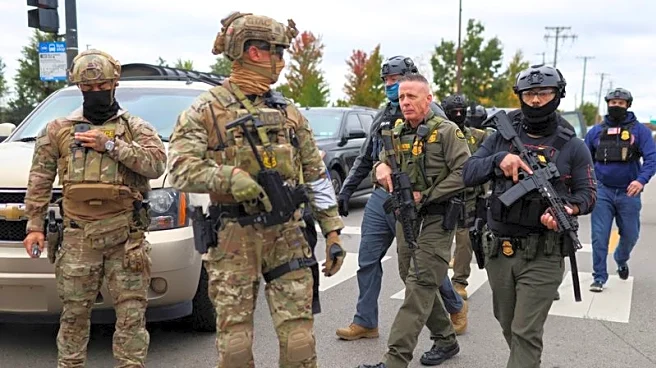
In the United States, a significant divide is emerging among states regarding cooperation with Immigration and Customs Enforcement (ICE) amid ongoing mass deportation protests. Democratic-led states like
Illinois, New York, and California are considering or have enacted laws to limit cooperation with ICE, including creating 'safe zones' where ICE arrests are prohibited. Illinois has even passed a law allowing citizens to sue federal agents in civil court, a move challenged by the Trump administration. Conversely, Republican-led states such as Tennessee and Kentucky are enhancing their support for ICE, with Tennessee providing grants to law enforcement agencies that collaborate with ICE. This divide is further highlighted by the Minnesota legislature's upcoming session, where Democrats plan to propose a bill allowing residents to sue federal agents and protect renters from eviction due to immigration enforcement.
Why It's Important?
The contrasting approaches to ICE cooperation reflect broader political and ideological divides in the U.S. The actions of Democratic states to limit ICE's reach underscore a growing resistance to federal immigration policies perceived as harsh and unjust. These measures could protect immigrant communities from aggressive enforcement actions, potentially reducing fear and instability among these populations. On the other hand, Republican states' support for ICE aligns with a stricter immigration enforcement stance, which they argue is necessary for national security and law enforcement. This polarization could lead to legal battles over states' rights versus federal authority, impacting national immigration policy and the lives of millions of immigrants.
What's Next?
As states continue to take divergent paths, legal challenges are likely to arise, particularly concerning the balance of power between state and federal governments. The Minnesota legislature's upcoming session will be a critical moment, as Democrats seek bipartisan support to pass new protections for immigrants. The outcome could influence other states' policies and set precedents for future legal battles. Additionally, the ongoing protests and public opposition to ICE actions may pressure lawmakers to reconsider their positions, potentially leading to policy shifts at both state and federal levels.