





What's Happening?
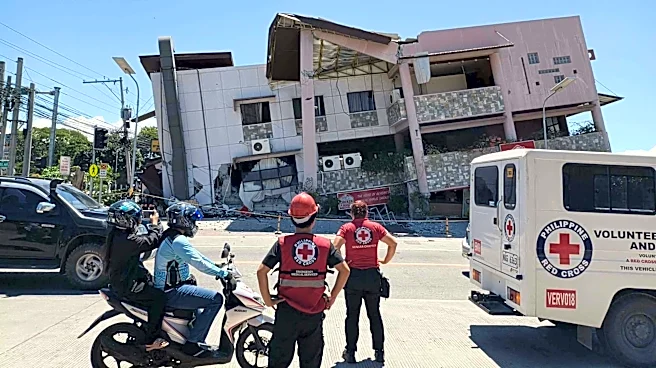
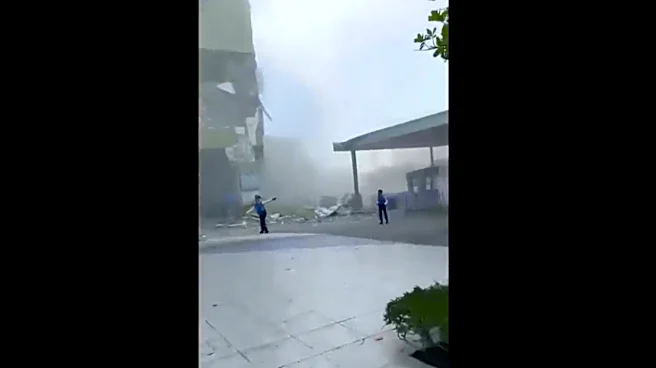
A powerful 7.8 magnitude earthquake struck off the southern Philippine island of Mindanao, resulting in at least 32 fatalities and over 200 injuries. The earthquake, which occurred near Sarangani province, triggered tsunami warnings across the region,
including northern Indonesia and the Malaysian state of Sabah. The tremors were felt strongly across Mindanao and as far as Manado in Indonesia. In General Santos City, significant damage was reported, including collapsed buildings and landslides. The Philippine government has mobilized military and disaster response teams to assist in search and rescue operations. President Ferdinand Marcos Jr. has ordered immediate disaster response efforts, emphasizing the government's commitment to supporting Mindanao.
Why It's Important?
The earthquake's impact is significant due to the extensive damage and loss of life it has caused in the region. The Philippines is part of the Pacific 'Ring of Fire,' making it prone to frequent seismic activity. This event highlights the vulnerability of the region to natural disasters and the importance of effective disaster preparedness and response strategies. The economic and social implications are considerable, as infrastructure damage can disrupt local economies and displace communities. The international response, including tsunami warnings in neighboring countries, underscores the interconnected nature of disaster management in the region.
What's Next?
The immediate focus will be on search and rescue operations and providing relief to affected communities. The government will likely conduct assessments of the damage to infrastructure and utilities, which could take time due to ongoing aftershocks. Long-term recovery efforts will involve rebuilding and strengthening infrastructure to withstand future seismic events. The international community may offer assistance, and regional cooperation will be crucial in managing the aftermath and preparing for potential future disasters.