

What's Happening?
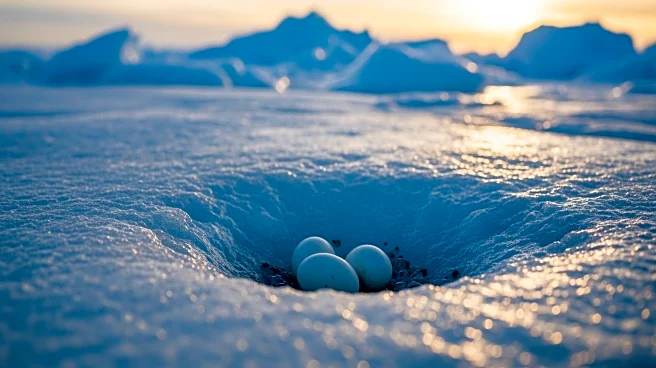
A recent study published in the Journal of Animal Ecology reveals that warming temperatures in Antarctica are causing penguins to begin their breeding season approximately two weeks earlier than a decade ago. This shift is attributed to a 5.4 degrees
Fahrenheit increase in temperatures from 2012 to 2022. The study, led by Ignacio Juarez Martinez from Oxford University, highlights that this rapid change in breeding timing is unprecedented among vertebrates. The Adelie, chinstrap, and gentoo penguins are affected, with the gentoo penguins adapting more quickly to the new conditions. This has led to increased competition for food resources, as gentoos, which have a more varied diet and are more aggressive, now overlap with the other species' breeding times. The study warns that this could lead to the extinction of the Adelie and chinstrap penguins by the end of the century if current trends continue.
Why It's Important?
The findings underscore the broader implications of climate change on biodiversity and ecosystem dynamics. The earlier breeding of penguins due to warming temperatures disrupts the delicate balance of the Antarctic ecosystem. As the gentoo penguins adapt more rapidly, they outcompete the Adelie and chinstrap penguins for food, primarily krill, which is crucial for chick survival. This shift not only threatens the survival of these species but also highlights the cascading effects of climate change on food chains and species interactions. The potential extinction of these penguin species would signify a loss of biodiversity and could have unforeseen impacts on the Antarctic marine ecosystem.
What's Next?
Continued monitoring of penguin populations is essential to understand the long-term impacts of these changes. Researchers emphasize the need for ongoing observation to determine if the altered breeding patterns will have detrimental effects on penguin populations. Additionally, the study suggests that increased commercial fishing, which coincides with the earlier breeding season, exacerbates the competition for food. Conservation efforts may need to focus on regulating fishing activities and protecting critical habitats to mitigate these impacts. The study also highlights the importance of public engagement in scientific research, as citizen scientists have contributed significantly to data collection through initiatives like the Penguin Watch website.
Beyond the Headlines
The study raises ethical considerations regarding human responsibility in addressing climate change and its impacts on wildlife. The rapid adaptation of gentoo penguins compared to their counterparts illustrates the uneven effects of environmental changes, creating 'winners' and 'losers' among species. This scenario prompts discussions on conservation priorities and the role of human intervention in preserving biodiversity. Furthermore, the study exemplifies how climate change can lead to unexpected ecological shifts, challenging scientists to predict and manage these changes effectively.