





What's Happening?
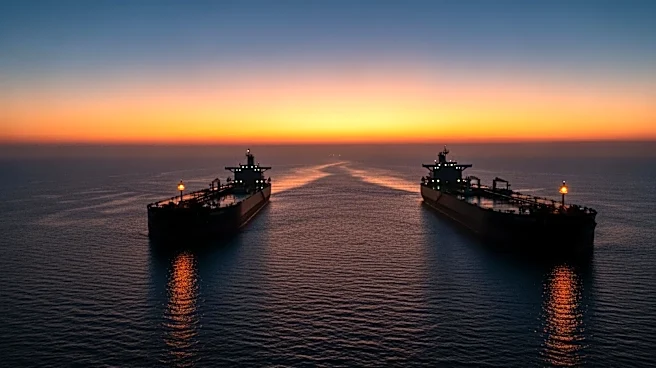
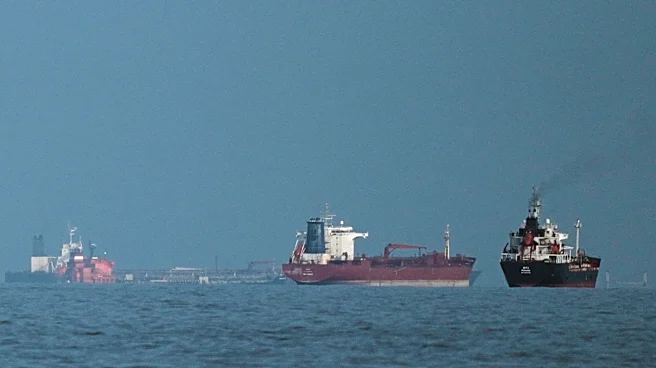
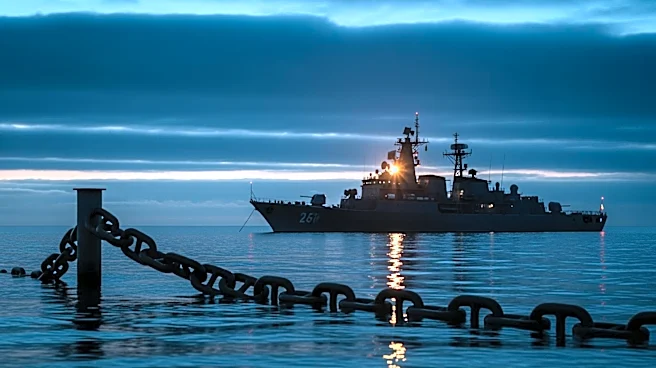
President Trump announced a naval blockade on ships entering or exiting Iranian ports, set to begin at 10 a.m. ET, following the collapse of negotiations with Iran. This move is part of a broader strategy to pressure Iran back to the negotiating table
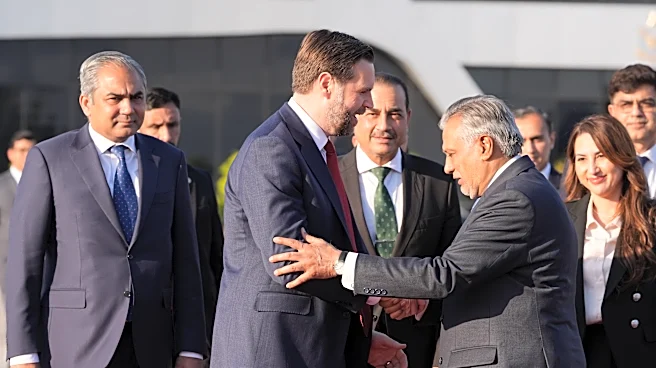
under less favorable conditions. The blockade aims to restrict Iran's oil exports and access through the Strait of Hormuz, a critical global shipping route. Despite the blockade, diplomatic efforts continue, with Pakistan working to mediate between the U.S. and Iran. Iranian officials have reacted strongly, asserting control over the Strait and accusing the U.S. of abandoning good-faith negotiations.
Why It's Important?
The naval blockade represents a significant escalation in U.S.-Iran tensions, with potential implications for global oil markets and regional stability. By targeting Iran's oil exports, the U.S. aims to increase economic pressure on Tehran, potentially affecting global energy prices and supply chains. The blockade also risks further destabilizing the region, as Iran may respond with military or economic measures. The situation highlights the complexities of U.S. foreign policy in the Middle East and the challenges of balancing diplomatic and military strategies to achieve national security objectives.
What's Next?
The blockade's implementation will be closely watched by international stakeholders, as it could lead to further escalation or renewed negotiations. The U.S. may consider additional military actions if Iran does not comply with demands, though such measures carry significant risks. Regional actors, including Pakistan, Saudi Arabia, and Turkey, are likely to continue diplomatic efforts to de-escalate tensions and preserve the ceasefire. The outcome of these efforts will be critical in shaping the future of U.S.-Iran relations and the broader geopolitical landscape in the Middle East.