
What's Happening?
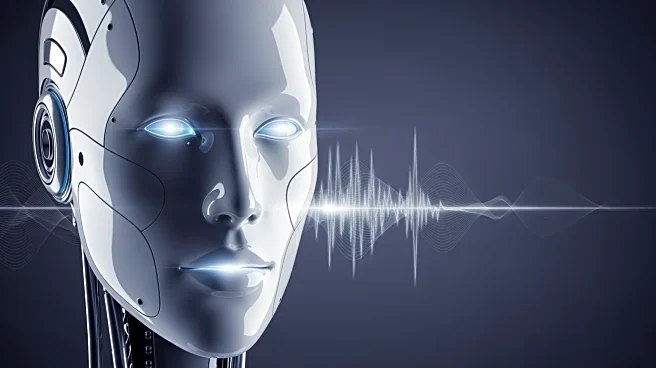
Engineers at Columbia University have developed a robot that can learn and recreate human lip motions for speech and singing. This technological advancement was achieved by training the robot using hours
of YouTube videos and having it practice by observing its own reflection. The robot utilizes 26 facial motors to mimic human lip movements, a task that has historically been challenging for robots, often resulting in an 'uncanny valley' effect. The research, led by Yuhang Hu for his PhD, was published in the Science Robotics journal. The robot's ability to articulate words in multiple languages and sing from its AI-generated album 'hello world_' marks a significant step forward in humanoid robotics, which traditionally focused on leg and hand motions.
Why It's Important?
This development is significant as it enhances the potential for robots to interact more naturally with humans, which could have wide-ranging applications in fields such as entertainment, education, medicine, and elder care. The ability to mimic human facial expressions, particularly lip movements, is crucial for creating robots that can effectively communicate and connect with people. This advancement could lead to more lifelike robots that are better integrated into daily human activities, potentially transforming industries that rely on human-robot interaction. The research suggests that as robots become more adept at mimicking human expressions, they could become more accepted and useful in various societal roles.
What's Next?
The researchers anticipate that the robot's lip-syncing abilities will improve with continued practice and interaction with humans. As these capabilities are refined, the technology could be integrated with conversational AI systems like ChatGPT or Gemini, further enhancing the depth of interaction between humans and robots. The team at Columbia's Creative Machines Lab envisions a future where humanoid robots with lifelike faces are commonplace, predicting that over a billion such robots could be manufactured in the next decade. This progression will likely drive further research and development in humanoid robotics, focusing on making robots more relatable and effective in human-centric environments.
Beyond the Headlines
The ethical and cultural implications of creating robots that closely mimic human expressions are profound. As robots become more lifelike, questions about their role in society, the potential for replacing human jobs, and the ethical considerations of human-robot relationships will become increasingly relevant. Additionally, the development of such technology raises concerns about privacy and the potential misuse of robots in surveillance or other intrusive applications. As the technology advances, it will be crucial to address these issues through thoughtful regulation and public discourse.