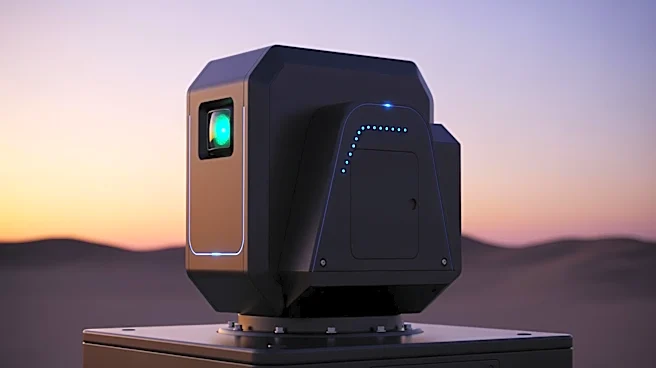







What's Happening?
The Federal Aviation Administration (FAA) and the Department of Defense have reached an agreement on the deployment of high-energy laser systems to counter drone threats at the U.S. Southern border. This decision follows a comprehensive safety assessment
that concluded these systems do not pose a significant risk to passenger aircraft. The assessment was conducted after demonstrations at White Sands Missile Range in New Mexico. Previously, the FAA had closed the airspace over El Paso, Texas, due to concerns about the safety impacts of these systems, which led to a temporary shutdown of the city's airport. The military will continue to work with the FAA to ensure that passenger planes, pilots, navigation equipment, and air traffic control are not adversely affected by the laser systems.
Why It's Important?
The agreement between the FAA and the Department of Defense is crucial for enhancing national security at the Southern border, where drone threats have been increasing. The use of laser systems to neutralize drones represents a significant advancement in counter-drone technology, potentially setting a precedent for future defense strategies. This development is particularly important for maintaining the safety of the National Airspace System while addressing emerging threats. The collaboration between these agencies ensures that security measures do not compromise the safety of civilian air travel, which is vital for the aviation industry and public confidence.
What's Next?
The FAA and the Department of Defense will continue to monitor the implementation of laser systems at the Southern border, ensuring that they operate without disrupting civilian air traffic. Further assessments and adjustments may be made as necessary to optimize the effectiveness and safety of these systems. Stakeholders, including Customs and Border Protection, will likely be involved in ongoing evaluations to address any new challenges that arise from the deployment of these technologies.