



What's Happening?
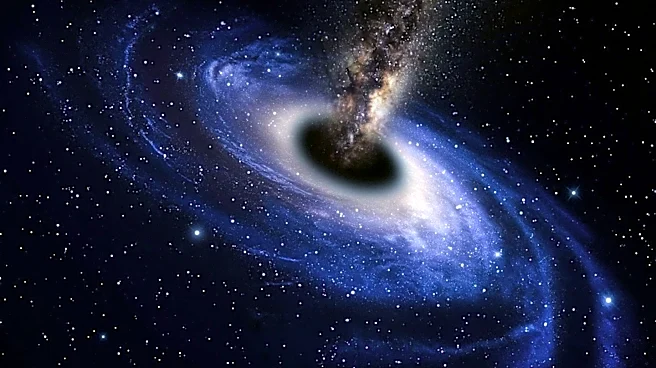
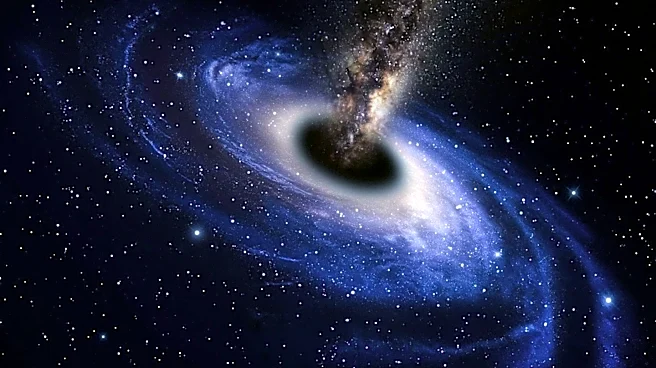
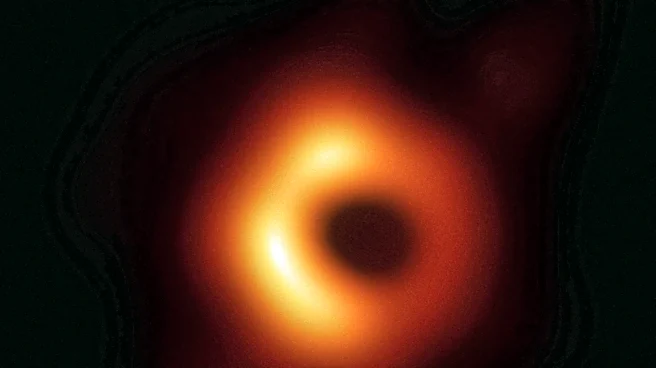
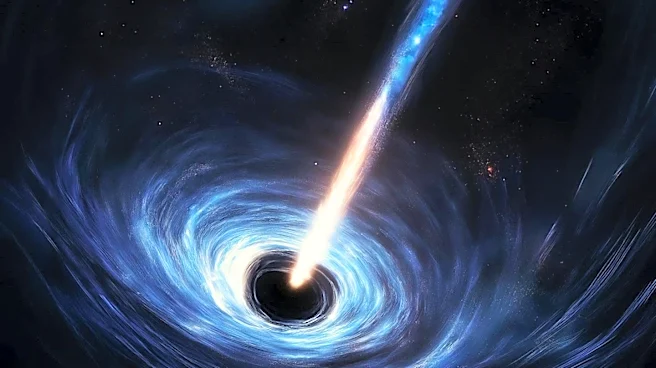
The 'Black Hole Hunters' project is inviting volunteers, regardless of formal astronomy training, to help identify previously undetected black holes in the Milky Way. Despite models suggesting hundreds of millions of black holes exist, only about 70 have
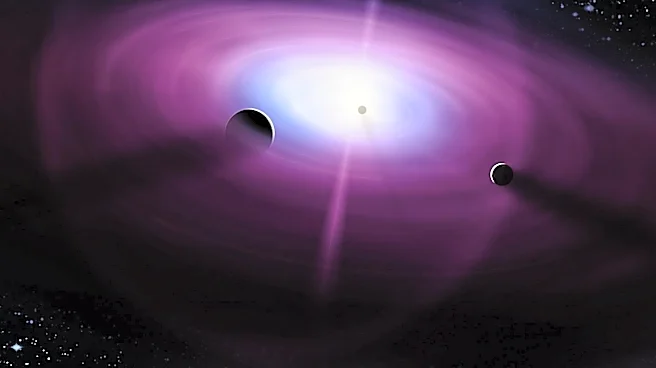
been located due to their invisibility to conventional observation methods. These isolated black holes do not emit light, X-rays, or radio waves unless matter falls into them. The project leverages artificial intelligence to pre-select promising data from NASA’s Transiting Exoplanet Survey Satellite (TESS), which generates millions of light curves—graphs showing changes in star brightness. Volunteers then manually review these selected light curves to spot weak, recurring increases in a star's brightness. This phenomenon, known as gravitational self-lensing, occurs when an invisible black hole orbiting a star passes in front of it, bending and brightening the star's light. The project, launched on the Zooniverse platform in 2021, has seen nearly 23,000 volunteers make almost 12 million classifications, completing about 43% of the work.
Why It's Important?
This citizen science initiative is crucial for addressing the significant gap between the theoretical number of black holes and those actually observed. Traditional methods struggle to detect isolated black holes, making projects like 'Black Hole Hunters' essential for expanding our catalog of these enigmatic objects. The gravitational self-lensing phenomenon, which volunteers are trained to identify, offers a unique pathway to detect black holes that are not actively accreting matter. By engaging the public, the project not only accelerates scientific discovery but also fosters greater public understanding and participation in astronomy. The sheer volume of data from TESS makes manual review by a large volunteer base indispensable, as even advanced AI algorithms can misinterpret data due to stellar variations or instrument glitches. Discovering more black holes will refine models of stellar evolution and galactic dynamics, providing a more complete picture of our galaxy's structure and history.
What's Next?
Following the volunteer-led identification of potential black hole candidates, astronomers plan to use more powerful telescopes to examine the flagged stars. This follow-up observation will be critical for confirming the presence of black holes and studying their characteristics. Adam McMaster, the project creator and astrophysicist, estimates that this collaborative effort could lead to thousands of new black hole discoveries. The project's success also highlights the growing role of citizen science in modern astronomical research, suggesting that similar models could be applied to other data-intensive scientific challenges. As the project continues, the accumulated data and confirmed discoveries will contribute significantly to our understanding of black hole populations and their distribution within the Milky Way, potentially revealing new insights into the universe's fundamental physics.
Beyond the Headlines
The 'Black Hole Hunters' project exemplifies a broader trend in scientific research: the democratization of data analysis and the power of collective intelligence. By breaking down complex astronomical data into manageable tasks, it allows individuals without specialized training to contribute meaningfully to cutting-edge science. This approach not only accelerates discovery but also cultivates a global community of amateur astronomers and science enthusiasts, fostering scientific literacy and engagement. The project's reliance on both AI for initial data filtering and human pattern recognition for final verification showcases a synergistic model of human-computer collaboration, where each excels at different aspects of data processing. Ethically, it raises questions about data ownership and attribution in citizen science, but the project's open-source nature and clear guidelines aim to address these. Culturally, it reinforces the idea that scientific exploration is not confined to professional labs but can be a shared human endeavor, connecting individuals worldwide through a common quest for knowledge about the cosmos.