




What's Happening?
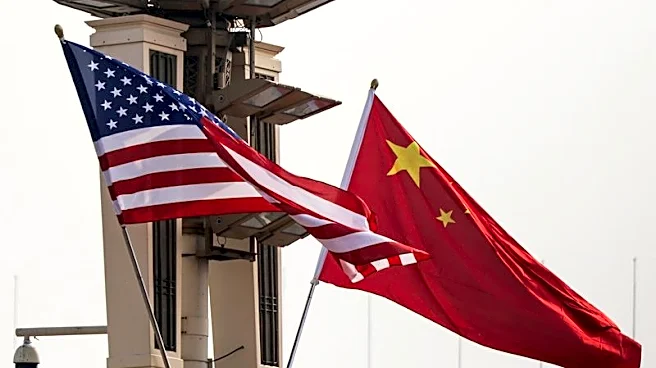
President Trump has postponed a planned call with Taiwanese President Lai Ching-te, as reported by CBS News. This decision comes ahead of a potential visit by Chinese President Xi Jinping to the United States. During a recent visit to China, President Trump was
cautioned by Xi about the sensitive nature of Taiwan, which China views as a breakaway province. Trump had previously indicated he might speak with Lai before deciding on a new arms sale to Taiwan, a move that has historically been sensitive due to U.S.-China relations. The last direct communication between a sitting U.S. president and a Taiwanese leader was in 1979, although Trump did receive a call from then-President Tsai Ying-wen in 2016. The Chinese government has expressed strong opposition to any official exchanges between the U.S. and Taiwan, as well as to U.S. arms sales to the island.
Why It's Important?
The delay in communication between President Trump and the Taiwanese leader underscores the delicate balance the U.S. must maintain in its relations with China and Taiwan. The U.S. has historically supported Taiwan through arms sales, a policy rooted in the Reagan-era Six Assurances, which pledges not to consult Beijing on such sales. The potential arms deal, valued at $14 billion, is significant for Taiwan's defense but also risks escalating tensions with China, which has vowed to reunify Taiwan with the mainland, potentially by force. The situation highlights the geopolitical complexities in the Asia-Pacific region and the strategic importance of Taiwan in U.S.-China relations.
What's Next?
President Trump's decision on the arms sale remains pending, with the State Department yet to approve the deal. The outcome could influence U.S.-China relations, especially with Xi's potential visit to the U.S. in the fall. The U.S. must navigate these diplomatic waters carefully to avoid exacerbating tensions with China while supporting Taiwan's defense needs. The international community will be watching closely for any developments, as they could have broader implications for regional stability and U.S. foreign policy.