








What's Happening?
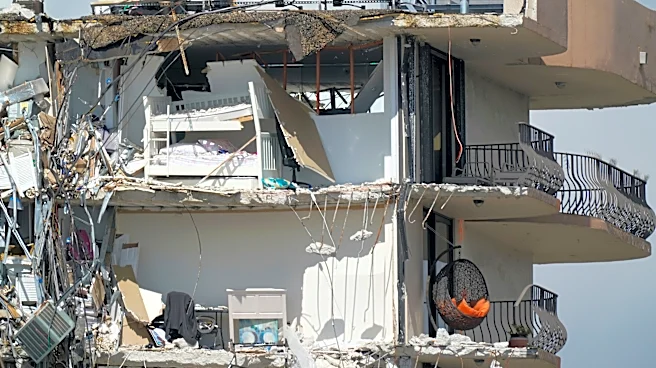
A federal investigation has concluded that the partial collapse of the Champlain Towers South condominium in Surfside, Florida, which resulted in the deaths of 98 people, was due to severe design and construction flaws dating back to 1981. The National
Institute of Standards and Technology (NIST) found that the building's structural failures began weeks before the final collapse, primarily due to corrosion and design deviations from the original building codes. The investigation highlighted a 'punching shear failure' in the connections between the underground parking garage columns and the pool deck slab, which led to a chain reaction of structural failures. These issues were exacerbated by modifications and long-term saltwater corrosion over the decades.
Why It's Important?
The findings of this investigation are significant as they highlight the critical importance of adhering to building codes and standards to ensure structural safety. The collapse of the Champlain Towers South is one of the deadliest structural failures in U.S. history, underscoring the potential consequences of design and construction oversights. The investigation's results could lead to changes in national building codes, construction standards, and inspection practices, aiming to prevent similar tragedies in the future. This case also raises awareness about the need for regular maintenance and inspection of older buildings, especially those exposed to harsh environmental conditions.
What's Next?
NIST will focus on finalizing its report, which will serve as a guide for updating building codes and standards. This report is expected to influence future construction practices and regulatory measures to enhance building safety. The findings may prompt legislative and industry actions to address the identified issues and improve the safety margins in building designs. Stakeholders, including policymakers, construction companies, and regulatory bodies, will likely engage in discussions to implement the recommended changes and prevent future structural failures.