






What's Happening?
A federal judge has issued a halt to the construction of a road within the Stehekin River in Washington state. This decision leaves the project on hold as a lawsuit filed by a conservation group, the North Cascades Conservation Council, moves forward.
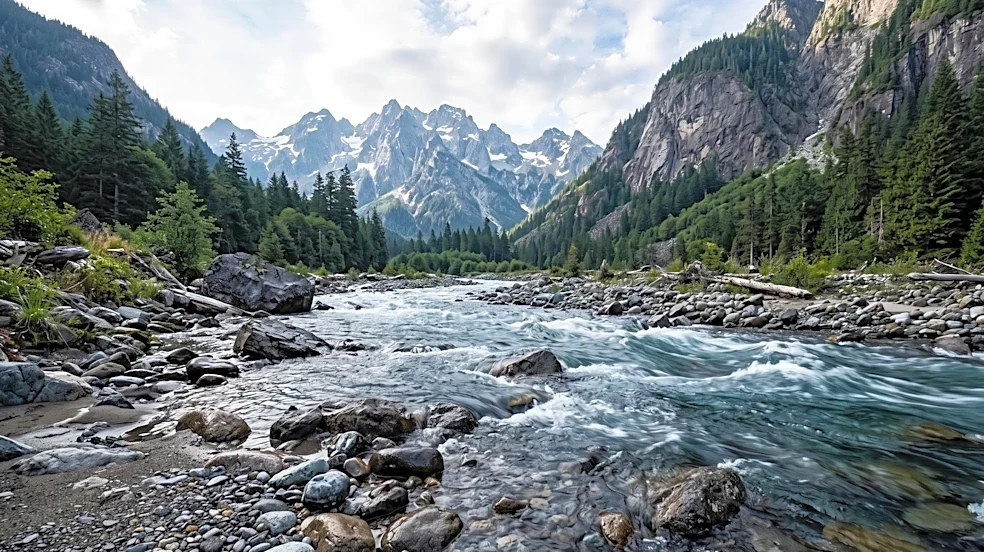
The National Park Service had proposed building a 350-foot section of Company Creek Road directly in the riverbed. This plan was developed after an atmospheric river storm in December caused flooding that washed out existing sections of the road, cutting off vehicle access for over two dozen residents. A land-based alternative route was rejected due to opposition from a private property owner. The riverbed proposal involves significant engineering, including sheet piling, artificial barriers, and dredging, to redirect water and facilitate road construction. The court's preliminary ruling indicates a strong likelihood that the National Park Service's initial environmental analysis did not adequately assess the potential impacts on aquatic life and the river's ecology.
Why It's Important?
This judicial intervention highlights the ongoing tension between infrastructure development and environmental protection in the U.S. The case underscores the critical role of environmental impact assessments in federal projects and the judiciary's power to ensure compliance with environmental regulations. For residents in the affected area, the halt means continued uncertainty regarding vehicle access to their properties, impacting daily life and potentially emergency services. For environmental advocates, it represents a victory in protecting sensitive ecosystems, particularly the kokanee salmon spawning habitat, which the North Cascades Conservation Council argues would be threatened by the construction. The ruling also brings into focus the potential for shifting flood risks downstream if the river's natural flow is significantly altered, raising concerns for other communities and ecosystems along the waterway.
What's Next?
Construction on the Company Creek Road project remains suspended while the lawsuit by the North Cascades Conservation Council proceeds through the legal system. The court's preliminary finding suggests that the National Park Service may need to conduct a more thorough environmental analysis, which could lead to revisions of the project plan or the exploration of alternative solutions. Residents who rely on Company Creek Road for access face an indefinite timeline for regaining vehicle access, prompting potential discussions about temporary solutions or expedited legal processes. Major stakeholders, including the National Park Service, local residents, and environmental groups, will likely engage in further legal arguments and potentially seek mediation or alternative engineering solutions that balance access needs with ecological preservation. The outcome of the lawsuit will set a precedent for similar infrastructure projects in environmentally sensitive areas.
Beyond the Headlines
The case in Washington's Stehekin River reflects a broader national challenge concerning land use, climate change adaptation, and the protection of natural resources. The atmospheric river storm that initiated this crisis points to the increasing frequency and intensity of extreme weather events, which are forcing communities to re-evaluate infrastructure resilience and environmental planning. The conflict between restoring essential access for residents and preserving critical habitats raises ethical questions about prioritizing human needs versus ecological integrity. Furthermore, the rejection of a land-based alternative due to private property opposition highlights the complexities of land ownership and public interest projects. This situation could spur discussions on eminent domain, land swaps, or other mechanisms to facilitate necessary infrastructure while minimizing environmental harm. The long-term implications could include a re-evaluation of how federal agencies conduct environmental reviews for projects in dynamic natural environments, especially those impacted by climate-driven changes.