



What's Happening?
Wyoming Republican Representative Harriet Hageman has criticized California for its alleged mismanagement of water resources, asserting that the state's failure to upgrade aging water infrastructure has exacerbated the Colorado River crisis. Hageman stated
that California, with a population of 40 million, still relies on water infrastructure from the 1960s, when its population was significantly smaller. She accused California of spending billions on 'pet projects' like high-speed rail instead of investing in essential water infrastructure. Hageman also noted that Arizona Governor Katie Hobbs has described the Department of the Interior's new 10-year plan for the Colorado River as imposing 'draconian water cutbacks' on her state. Hageman, a former water and natural resources attorney, believes that if the issue escalates to a legal battle, Wyoming's irrigation water rights would prevail.
Why It's Important?
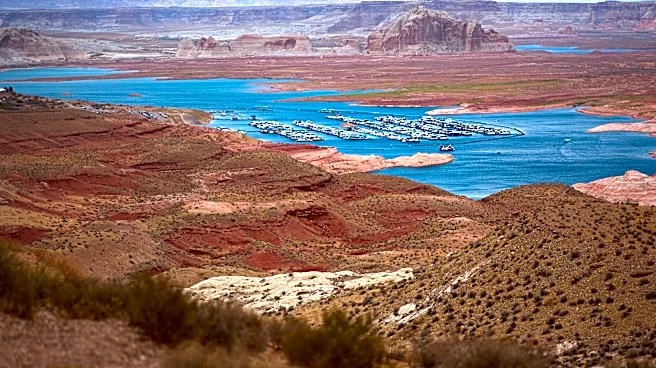
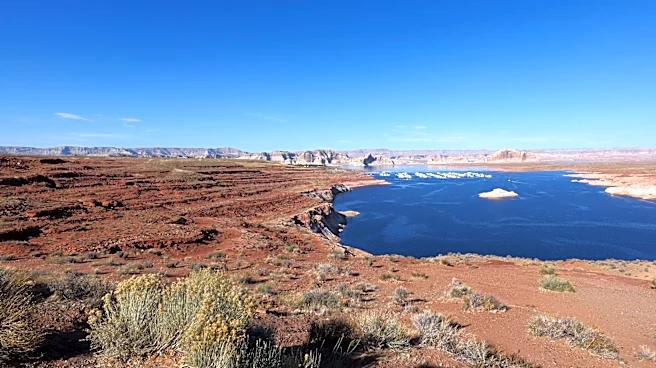
The ongoing Colorado River crisis and the interstate disputes over water allocation have significant implications for the Western U.S. The dwindling water levels in key reservoirs like Lake Powell and Lake Mead threaten hydroelectric power generation and water supply for millions across multiple states. Hageman's comments highlight the deep-seated tensions between Upper Basin states (Wyoming, Colorado, Utah, New Mexico) and Lower Basin states (California, Arizona, Nevada) regarding water rights and responsibilities. Her argument that California's internal spending priorities have contributed to the crisis underscores a broader debate about state-level governance, infrastructure investment, and regional cooperation in addressing critical environmental challenges. The potential for legal battles over the 1922 Colorado River Compact could lead to prolonged uncertainty and impact agricultural, industrial, and municipal water users.
What's Next?
The Department of the Interior's new 10-year plan for the Colorado River is expected to guide water management in the coming decade, though its reception varies among states. Arizona Governor Katie Hobbs' strong opposition to the plan's proposed cutbacks suggests potential legal challenges from Arizona, which Hageman anticipates. The ongoing decline in water levels at Lake Powell and Lake Mead will likely intensify pressure on all basin states to find sustainable solutions. Hageman advocates for California to pursue desalination of Pacific Ocean water more aggressively, citing Israel's success in this area. The debate over the 1922 Compact's interpretation and the possibility of a new compact will continue, with Hageman arguing against replacing the existing compact due to the potential for lengthy legal disputes and uncertain outcomes for Upper Basin states.
Beyond the Headlines
The Colorado River crisis extends beyond immediate water allocation issues, touching upon long-term climate change impacts, regional economic stability, and the future of agricultural practices in the West. The accusations of misprioritized spending in California by Representative Hageman bring to light the complex interplay between state budgets, environmental policy, and inter-state relations. The concept of 'dead pool' in major reservoirs, where water levels are too low for hydroelectric power generation, represents a critical threshold that could trigger widespread energy and economic disruptions. This situation also raises ethical questions about equitable resource distribution and the responsibility of states with larger populations and economies to adapt to changing environmental realities, potentially through costly infrastructure projects like desalination, to ensure regional stability.