
What's Happening?
The National Oceanic and Atmospheric Administration (NOAA) has released its 20th Arctic Report Card, highlighting significant environmental changes in the Arctic region. The report indicates that the Arctic is warming
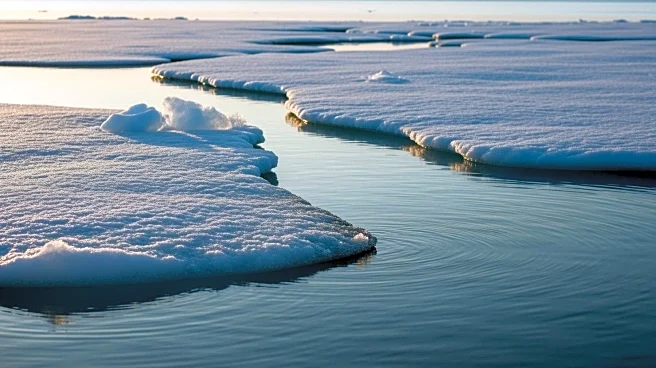
more than twice as fast as the global average, with 2025 recording the highest air temperatures since records began 125 years ago. This warming trend is leading to a dramatic reduction in sea ice, with the summer sea ice extent shrinking by about 50% since the 1980s. The Greenland Ice Sheet continues to lose mass, contributing to global sea-level rise. Additionally, the Arctic is experiencing increased precipitation and more extreme weather events, such as ex-typhoons, which are causing significant damage to local communities. The report also notes a shift in ecosystems, with boreal species moving northward and tundra vegetation productivity increasing.
Why It's Important?
The changes in the Arctic have far-reaching implications for global climate patterns and sea levels. The loss of sea ice and the Greenland Ice Sheet contributes to rising sea levels, which can lead to coastal flooding and erosion worldwide. The warming Arctic also affects global weather patterns, potentially leading to more extreme weather events. The shift in ecosystems could disrupt local food chains and impact indigenous communities that rely on traditional subsistence practices. Furthermore, the Arctic serves as a critical indicator of broader environmental changes, highlighting the urgent need for global efforts to address climate change and its impacts.
What's Next?
The ongoing changes in the Arctic underscore the need for enhanced monitoring and research to better understand and mitigate the impacts of climate change. Indigenous communities are playing a crucial role in these efforts, developing local observation systems to track environmental changes. These initiatives are vital for building resilience and adapting to the rapidly changing conditions. International cooperation and policy measures will be essential to address the challenges posed by Arctic warming and to protect vulnerable communities and ecosystems.
Beyond the Headlines
The Arctic's transformation is not only a climate issue but also a geopolitical one, as nations vie for influence and resources in the region. The melting ice opens new shipping routes and access to untapped natural resources, raising concerns about environmental protection and territorial claims. The Arctic's changes also highlight the interconnectedness of global ecosystems, emphasizing the need for comprehensive strategies to tackle climate change, biodiversity loss, and pollution.