







What's Happening?
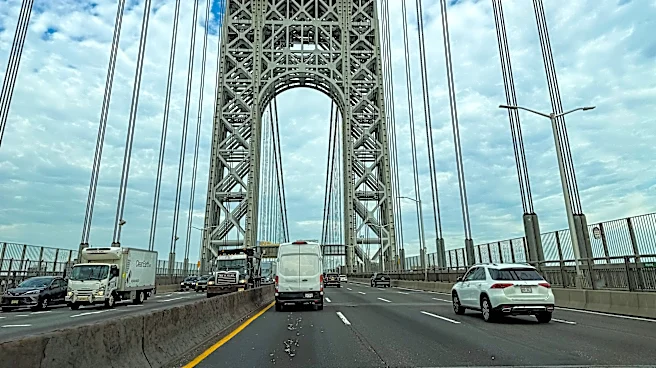
Orange County residents are now eligible for a 20% discount on tolls for the Mario Cuomo Bridge, also known as the Tappan Zee Bridge. This reduction means that residents using E-ZPass will pay $5.80 per trip, a decrease from the standard $7.25 toll. State
legislators representing Orange County have advocated for this measure, citing the need to alleviate the financial burden on commuters traveling into New York City for work. Assemblymember Chris Eachus, representing the 99th District, stated that the discount is a significant step towards easing the costs for drivers west of the Hudson River, especially given other expenses like state thruway tolls, MTA payroll tax, and congestion pricing. Residents of Rockland and Westchester Counties already receive similar discounts on the Tappan Zee Bridge. The New York State Thruway Authority reports that approximately 50 million vehicles cross the bridge annually.
Why It's Important?
This toll discount is important for Orange County residents as it directly addresses the rising cost of commuting into New York City, a significant concern for many. The measure aims to provide tangible financial relief, potentially saving commuters hundreds of dollars annually. For state legislators, this initiative demonstrates responsiveness to constituent concerns regarding affordability and the economic pressures of daily travel. The existing discounts for Rockland and Westchester County residents highlight a broader regional effort to mitigate the impact of tolls on local populations who frequently use these critical transportation arteries. The high volume of traffic on the Mario Cuomo Bridge underscores its importance as a commuter route, and any measure that makes it more accessible or affordable can have a widespread positive impact on the daily lives and household budgets of thousands of individuals and families in the region.
What's Next?
The implementation of this toll discount is expected to immediately benefit Orange County residents who commute via the Mario Cuomo Bridge. It may also set a precedent or encourage similar initiatives in other regions facing high commuting costs. Local and state officials will likely monitor the impact of this discount on commuter behavior and regional traffic patterns. There could be continued discussions regarding further measures to reduce the financial strain on commuters, potentially including expanded discount programs or alternative transportation solutions. The success of this initiative could also influence future policy decisions related to tolling structures and transportation funding across New York State, particularly in areas adjacent to major metropolitan centers where residents frequently cross tolled infrastructure for work or other essential activities.
Beyond the Headlines
Beyond the immediate financial relief, this toll discount touches upon broader issues of regional equity and economic accessibility. The disparity in commuting costs can significantly impact where people choose to live and work, influencing regional development and demographic shifts. By reducing the burden on Orange County residents, the state is implicitly acknowledging the economic interconnectedness of the wider New York metropolitan area and the need to support its workforce. This move could also spark conversations about the long-term sustainability of tolling as a primary funding mechanism for infrastructure, especially when it disproportionately affects certain communities. It highlights the ongoing tension between infrastructure maintenance costs and the public's ability to afford essential travel, prompting a re-evaluation of how these costs are distributed among different user groups and geographic areas.