






What's Happening?
NASA has announced a significant restructuring of its Artemis III mission, originally planned to land astronauts on the lunar surface. Instead, Artemis III will now serve as a demonstration mission in low Earth orbit, involving the docking of two commercial
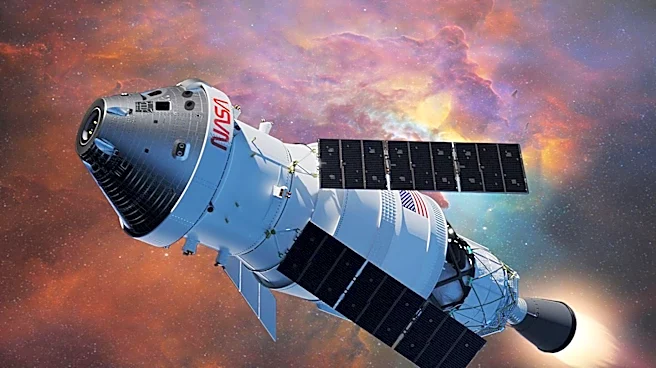
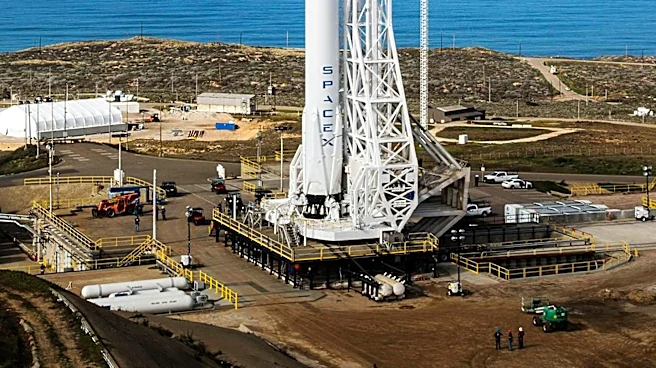
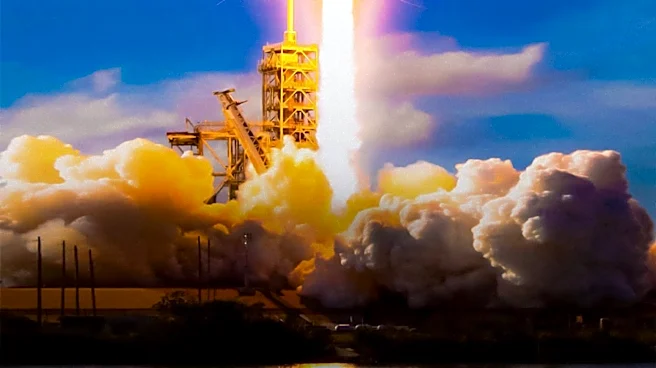
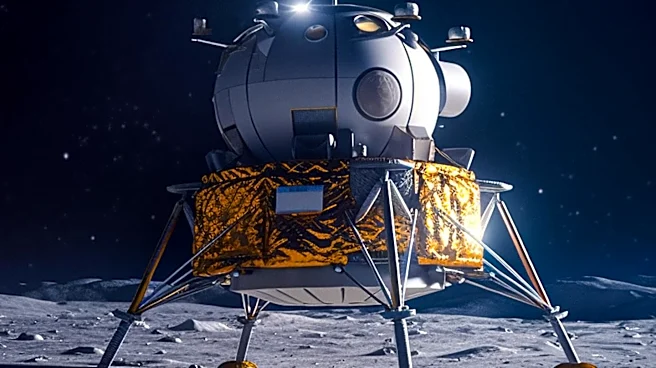
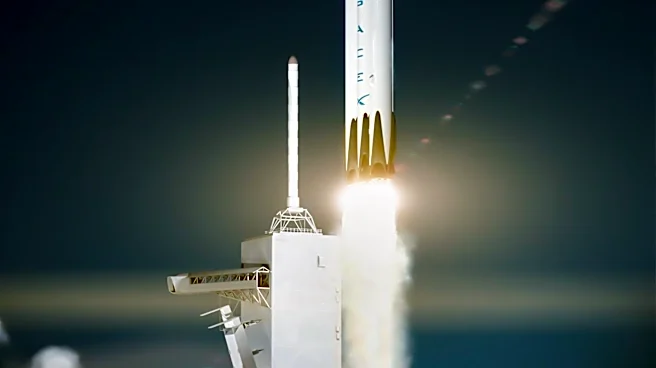
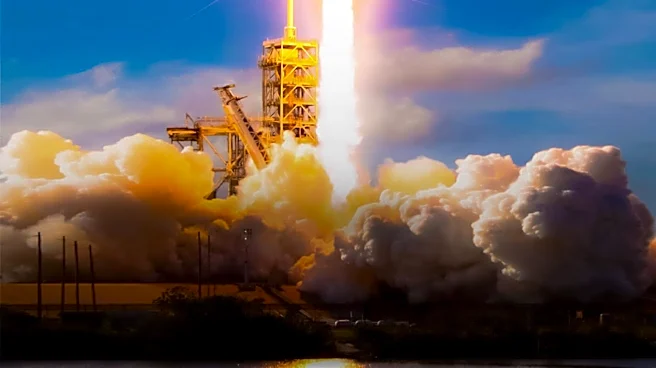
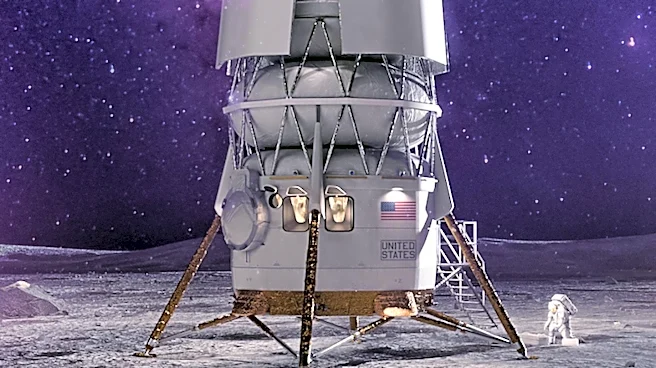
landers with the Orion spacecraft. The mission will feature Blue Origin's Blue Moon, NASA's Space Launch System (SLS) with Orion, and SpaceX's Starship, all launching in close succession. The crew of four, including Commander Randy Bresnik and Pilot Luca Parmitano from the European Space Agency, will perform rendezvous and docking operations with the two vehicles. This decision, made in February 2026 and announced in March, shifts the lunar landing to Artemis IV, scheduled for early 2028. The focus of Artemis III will be on testing the integration of spacecraft from different companies in a single crewed operation.
Why It's Important?
The restructuring of Artemis III underscores NASA's commitment to ensuring the reliability and safety of its lunar missions. By focusing on orbital demonstrations, NASA aims to validate the complex operations required for future lunar landings. This approach allows for thorough testing of docking procedures and spacecraft integration, which are critical for the success of subsequent missions. The decision to delay the lunar landing to Artemis IV reflects NASA's cautious strategy to mitigate risks and enhance mission success. This shift has implications for the U.S. space industry, as it involves collaboration with commercial partners like Blue Origin and SpaceX, highlighting the growing role of private companies in space exploration. The success of Artemis III could pave the way for more ambitious lunar and deep space missions, reinforcing the U.S.'s leadership in space exploration.
What's Next?
Following the completion of Artemis III, NASA will analyze the data collected from the docking and integration tests to inform the planning of Artemis IV. The agency will assess the performance of the commercial landers and Orion in low Earth orbit, focusing on the reliability of the docking mechanisms and the control of the integrated spacecraft. The results will guide NASA's selection of the lander for Artemis IV, which will attempt the actual lunar landing. The success of Artemis III is crucial for maintaining the timeline for Artemis IV, as it will determine the readiness of the spacecraft and mission control systems for the lunar surface operations. NASA's collaboration with commercial partners will continue to evolve, with potential adjustments to the mission architecture based on the outcomes of Artemis III.