




What's Happening?
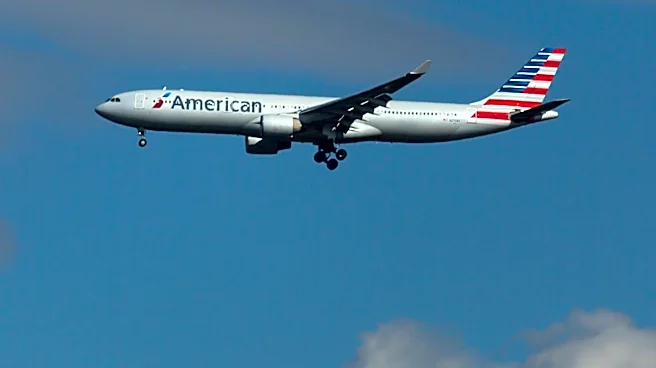
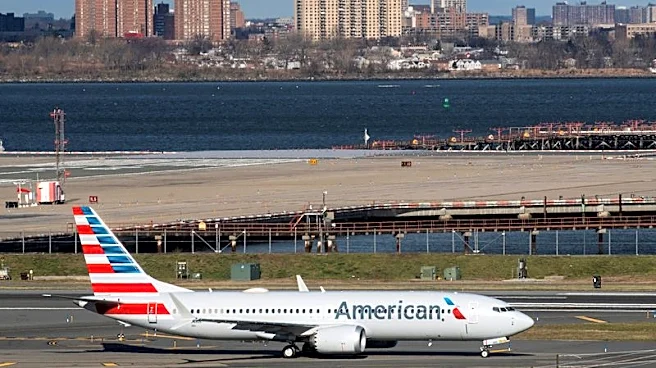
On August 17, two separate commercial flights experienced tire blowouts upon landing at Chicago O'Hare International Airport. The first incident involved American Airlines Flight 386, a Boeing 737-800 arriving from New York's LaGuardia Airport, which
landed around 2 p.m. local time. The crew reported two blown tires. Passengers deplaned via stairs and were bused to the terminal. Approximately three hours later, at 5:15 p.m., United Airlines Flight 739, an Airbus A320 arriving from Omaha, Nebraska, also sustained tire damage after landing. This flight carried 121 passengers and five crew members. In both cases, the planes landed safely, and no injuries were reported. The Federal Aviation Authority (FAA) is currently investigating both incidents. Both aircraft have been taken out of service for inspection by their respective maintenance teams.
Why It's Important?
These incidents highlight the robust safety protocols and engineering redundancies in modern aviation. The fact that both planes landed safely despite tire failures underscores the design of airliner landing gear, which incorporates multiple tires to manage such events. As noted by retired US Airways captain John Cox in 2017, if one tire is compromised, others can bear the load, allowing for a safe landing. While tire blowouts are uncommon, their occurrence on the same day at a major hub like O'Hare could prompt a closer look at maintenance schedules, operational procedures, or environmental factors. For passengers, such events can be unsettling, but the lack of injuries in both cases reinforces public confidence in air travel safety mechanisms. The FAA's investigation will be crucial in determining any underlying causes and potentially informing future safety guidelines for airlines and airports.
What's Next?
The Federal Aviation Authority (FAA) will conduct thorough investigations into both incidents to determine the exact causes of the tire blowouts. This will likely involve examining maintenance records, flight data recorders, and the damaged tires themselves. American Airlines and United Airlines have both stated that their respective aircraft have been removed from service for detailed inspections by their maintenance teams. Depending on the findings of the FAA's investigations, there could be recommendations for changes in maintenance practices, tire manufacturing standards, or operational procedures. Airlines will await these findings to implement any necessary adjustments to ensure continued passenger safety. Passengers from both flights were safely transported to the terminal, and the airlines have apologized for the inconvenience caused by the incidents.
Beyond the Headlines
The simultaneous occurrence of tire blowouts on two different aircraft types from different airlines at the same airport on the same day, while not necessarily indicative of a systemic issue, could lead to broader discussions within the aviation industry. Beyond the immediate technical investigation, this situation might prompt a review of shared operational conditions at O'Hare, such as runway conditions, foreign object debris (FOD) detection, or even environmental factors like temperature fluctuations that could affect tire integrity. It also subtly reinforces the importance of continuous investment in aviation safety research and development, ensuring that aircraft designs and operational protocols remain resilient against unexpected mechanical failures. The public's perception of air travel safety, though generally high, is sensitive to such events, making transparent and thorough investigations paramount for maintaining trust.