


What's Happening?
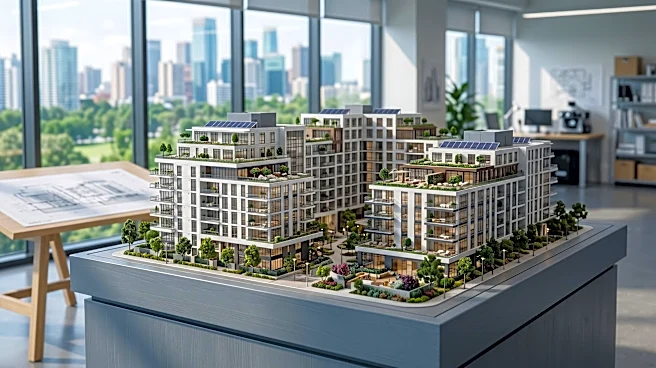
Atlanta Mayor Andre Dickens participated in the groundbreaking ceremony for 'The Den at 850 West,' a new affordable student housing complex for Morehouse and Spelman Colleges. Located on Historic West End Avenue, the development will feature 305 apartments
with 793 beds, all equipped with air conditioning and situated near both campuses. Mayor Dickens highlighted that this project aims to address the rising cost of housing in Atlanta and other major cities. David Moody, owner of Moody Construction and a Morehouse College graduate, is leading the $147 million public-private residential investment. Spelman graduate and civil engineer Tanaka Sakuringwa also contributed to the design. The complex is expected to be completed in two years and will offer dorm units at a lower cost than typical apartment rentals, while also contributing to economic development in Atlanta's West End by utilizing local workers and equipment.
Why It's Important?
This initiative is significant for several reasons. Firstly, it directly tackles the issue of housing affordability for students attending Historically Black Colleges and Universities (HBCUs) in Atlanta, making higher education more accessible and sustainable for many. The provision of affordable and safe housing can improve student well-being and academic performance. Secondly, the project represents a substantial investment in Atlanta's West End, signaling broader economic development and revitalization efforts in the area. By employing local workers and resources, the project aims to stimulate the local economy and create job opportunities. Furthermore, the involvement of alumni like David Moody and Tanaka Sakuringwa underscores the enduring legacy and community commitment of these institutions, fostering a sense of pride and reinvestment within the HBCU community.
What's Next?
Construction of 'The Den at 850 West' is projected to be completed in two years. Upon its opening, nearly 800 students from Morehouse and Spelman Colleges will have access to affordable and modern housing. This development could serve as a model for other cities and educational institutions facing similar housing challenges, potentially inspiring more public-private partnerships to address student housing needs. The project's completion will also likely contribute to further economic growth and community development in Atlanta's West End, as the influx of students and continued investment could attract more businesses and services to the area. Local officials and community leaders will likely monitor the project's impact on student life and the surrounding neighborhood.
Beyond the Headlines
The development of affordable student housing at HBCUs like Morehouse and Spelman has deeper implications beyond immediate housing needs. It addresses historical disparities in access to quality housing and resources for minority students. By providing modern, affordable living spaces, these institutions can enhance their competitiveness and attract a more diverse student body, fostering a richer academic and social environment. This project also highlights the growing trend of cities and educational institutions collaborating to solve urban challenges, particularly in areas like housing and economic development. The success of such ventures can strengthen the bond between universities and their surrounding communities, creating a more integrated and supportive urban fabric.