



What's Happening?
A federal jury in Greenville, Mississippi, has acquitted James Michael Fisher, a former engineer, of charges related to making false statements and obstructing justice during the investigation of a 2017 military plane crash. The crash involved a KC-130T
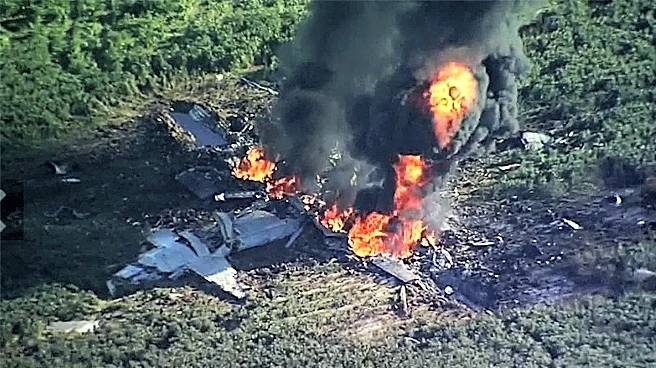
transport plane that resulted in the deaths of 16 service members. Fisher, who was the lead propulsion engineer at the Warner Robins Air Logistics Complex in Georgia, was accused of lying about changes to inspection procedures for propeller blades. The crash occurred when a propeller blade broke apart mid-flight, causing the plane to disintegrate and crash into soybean fields near Itta Bena, Mississippi. The defense argued that Fisher was not responsible for the changes in inspection procedures, as he was in Brazil at the time, and that the document allowing the change was not related to the crash.
Why It's Important?
The acquittal of James Michael Fisher highlights the complexities involved in military aircraft maintenance and the challenges in assigning accountability for tragic accidents. The case underscores the importance of rigorous inspection procedures and the potential consequences of procedural lapses. The crash was the deadliest Marine Corps air disaster since 2005, emphasizing the critical need for safety in military operations. The outcome of the trial may impact future investigations and policies regarding military aircraft maintenance and accountability. It also brings closure to a high-profile case that has been under scrutiny for several years, affecting the families of the victims and the military community.
What's Next?
Following the acquittal, there may be further reviews of military aircraft maintenance procedures to prevent similar incidents. The military might reassess its inspection protocols and training to ensure compliance and safety. Additionally, the case could lead to discussions on improving transparency and accountability in military investigations. The families of the victims may seek further explanations or pursue other avenues for justice and closure. The military may also consider implementing new technologies or systems to enhance the safety and reliability of its aircraft.