


What's Happening?
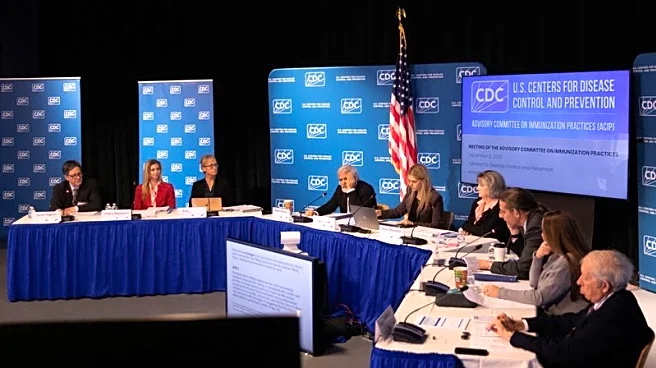
The National Security Council under President Trump convened the inaugural meeting of the Board of Peace in Washington, D.C. This meeting, initially focused on the reconstruction of the Gaza Strip, has expanded its mandate to address global conflicts.
The event saw participation from officials representing nearly 50 countries, with 27 countries officially joining the board. The European Union and several other nations attended as observers. During the meeting, President Trump announced that nine board members committed a total of $7 billion towards relief efforts in the Gaza Strip. The meeting aimed to encourage the United Nations to take more decisive action in global crisis management.
Why It's Important?
The establishment of the Board of Peace under President Trump's administration signifies a strategic shift in how the U.S. engages with international conflict resolution. By expanding the board's mandate beyond Gaza, the U.S. is positioning itself as a central player in global peace efforts. The financial commitment of $7 billion underscores the seriousness of the initiative and could potentially influence the U.N.'s approach to crisis management. This move may strengthen U.S. diplomatic ties with participating countries and enhance its influence in international peacekeeping efforts. However, it also raises questions about the U.N.'s role and effectiveness in handling global conflicts.
What's Next?
The Board of Peace is expected to continue its efforts to push the United Nations towards more proactive crisis management. The involvement of a diverse group of countries suggests potential for collaborative international strategies. Future meetings and initiatives will likely focus on specific conflict zones and the allocation of pledged resources. Observers will be watching to see how the board's actions influence U.N. policies and whether it can achieve tangible results in conflict resolution. The reactions of major stakeholders, including U.N. member states and international organizations, will be crucial in determining the board's long-term impact.