
What's Happening?
Dr. Aaron T. Fisk, a researcher at the University of Windsor, has been named a Fellow of the Royal Society of Canada, one of Canada's highest academic honors. This recognition is for his more than two
decades of work in freshwater research, which has significantly advanced the understanding of aquatic ecosystems. Fisk's research spans various areas, including how contaminants move through aquatic food webs and the movement, feeding, and spawning patterns of fish across the Great Lakes and the Arctic. He has been instrumental in developing infrastructure for freshwater research, such as the Great Lakes Acoustic Telemetry Observation System (GLATOS) and the Real-Time Aquatic Ecosystem Observation Network (RAEON). His work with GLATOS involves tracking multiple fish species in Lake Ontario, Lake Huron, and Georgian Bay, including collaborations with U.S. scientists to study the impact of rainbow trout aquaculture on wild fish in the Georgian Bay and Parry Sound area. Fisk has published over 330 scientific papers, secured substantial research funding, and mentored more than 60 graduate students and postdoctoral fellows.
Why It's Important?
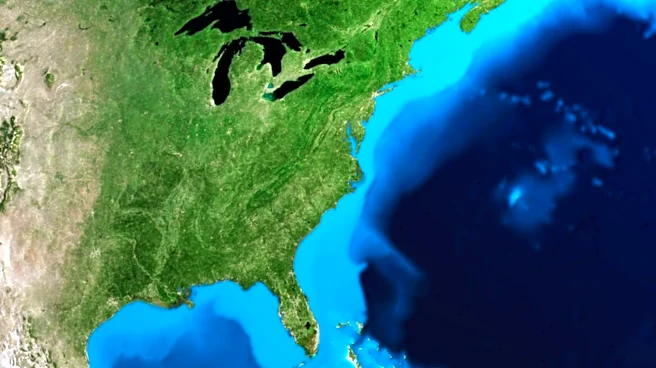
Dr. Fisk's research holds significant importance for the U.S. due to its direct impact on the Great Lakes, a shared natural resource between the U.S. and Canada. The Great Lakes support multi-billion dollar recreational and commercial fisheries, and understanding their ecosystems is crucial for their sustainability. His work on contaminant dynamics and fish movement provides vital information for fisheries management, ecosystem restoration, and environmental policy on both sides of the border. For instance, his studies on the decline of yellow perch in Lake Erie, a species with significant recreational and commercial value, highlight the economic and ecological consequences of ecosystem changes. The infrastructure he helped build, like GLATOS and RAEON, facilitates collaborative research efforts between Canadian and U.S. scientists, enabling a more comprehensive approach to managing and protecting this critical freshwater system. The insights gained from his research help anticipate the impacts of climate change, invasive species, and pollution on water quality and fish populations, directly affecting U.S. communities and industries reliant on the Great Lakes.
What's Next?
The continued research by Dr. Fisk and his collaborators will likely focus on further understanding and mitigating the impacts of climate change, invasive species, and nutrient pollution on the Great Lakes. The data collected through systems like GLATOS and RAEON will continue to inform fisheries management and environmental policy decisions in both Canada and the U.S. Future efforts will likely involve more sophisticated modeling to forecast the long-term effects of a warming Great Lakes ecosystem and identify which species are most vulnerable. The ongoing mentorship of graduate students and postdoctoral fellows by Fisk ensures a pipeline of future scientists dedicated to freshwater research, fostering continued collaboration and knowledge sharing between U.S. and Canadian institutions. This sustained research and collaboration are essential for developing effective strategies to protect the ecological and economic health of the Great Lakes for future generations.
Beyond the Headlines
Dr. Fisk's work extends beyond immediate ecological concerns, touching upon the broader ethical and cultural dimensions of environmental stewardship. His emphasis on understanding food webs and tracking individual fish movements has revolutionized how scientists perceive and manage aquatic ecosystems, shifting from broad generalizations to precise, data-driven interventions. This approach underscores the interconnectedness of environmental health with human well-being, as healthy Great Lakes ecosystems are vital for the livelihoods of fishing communities, tourism, and the overall quality of life for millions of people in the region. The collaborative nature of his research, involving scientists from both Canada and the U.S., highlights the necessity of international cooperation in addressing transboundary environmental challenges. Furthermore, his dedication to mentoring new researchers ensures that the scientific community will continue to have skilled professionals capable of tackling complex environmental issues, fostering a long-term commitment to the preservation of critical natural resources like the Great Lakes.