



What's Happening?
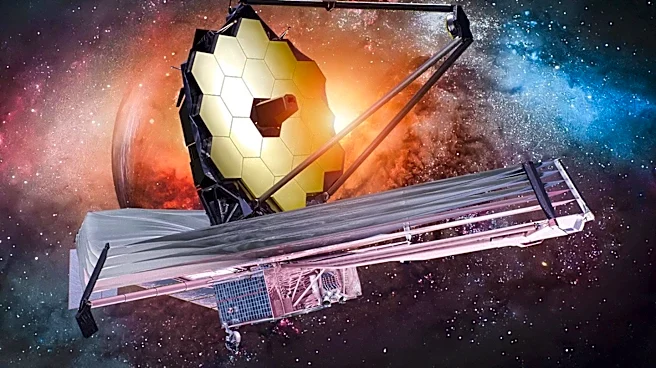
Astronomers are proposing a new theory to explain the mysterious 'little red dots' observed in images from the James Webb Space Telescope. These dots, which appeared in almost every deep field image since the telescope began operations in 2022, did not
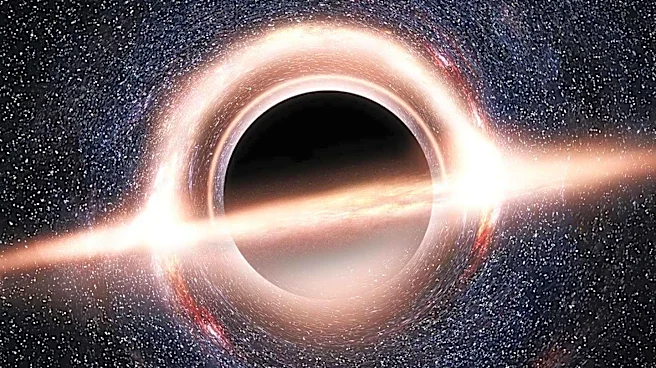
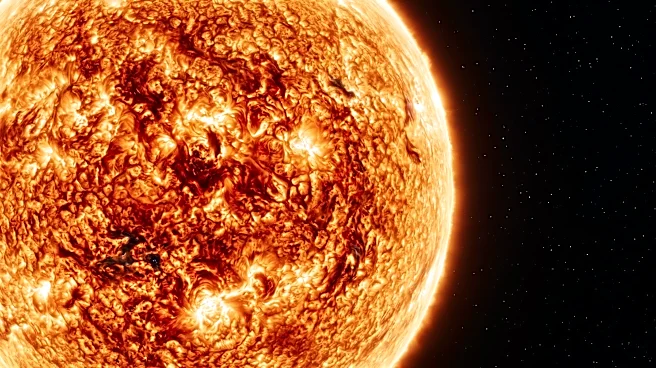
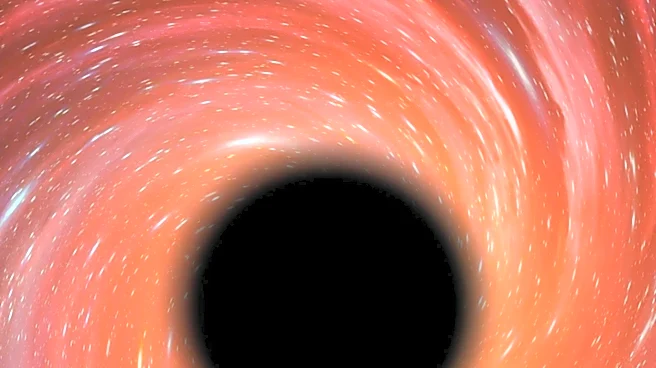
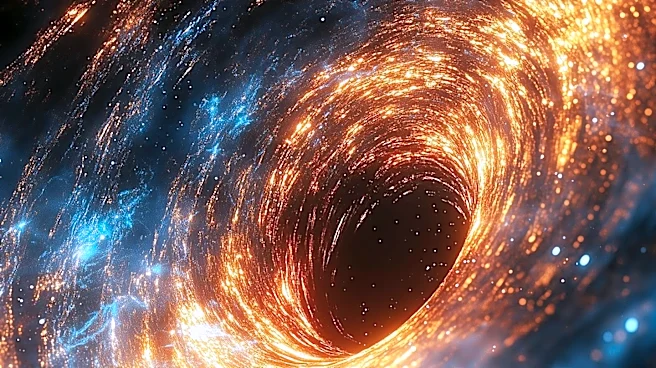
fit previous explanations. Initially, they were considered too massive and settled to be young galaxies, and too quiet to be supermassive black holes. A team led by Rohan Naidu, now at the University of Hawai'i, published an analysis suggesting that one such dot, named MoM-BH*-1, is a black hole approximately 100,000 times the mass of the sun, enveloped in dense hydrogen gas. This gas cocoon glows like an enormous star, roughly the size of our solar system, with the black hole performing the function of nuclear fusion in generating its immense brightness. This object outshines the brightest known star by about 100 billion times. The light from MoM-BH*-1 originated when the universe was approximately 660 million years old. The spectrum of this object showed a 'Balmer break' and lacked heavier elements, which is inconsistent with typical dusty galaxies.
Why It's Important?
This new 'black hole star' theory could fundamentally alter long-held assumptions about the formation and concealment of the universe's most violent objects. If these red dots are indeed black holes cloaked in stellar nurseries, it would challenge decades of cosmological understanding regarding how black holes form and evolve in the early universe. The abundance of these objects in the first billion years of the universe, and their subsequent disappearance by roughly two billion years, has been a significant puzzle for cosmologists. This theory offers a potential explanation for this unusual behavior. Furthermore, Rohan Naidu suggests that such objects might play a crucial role in determining the rate at which galaxies form stars, implying a profound impact on the overall cosmic evolution and everything that depends on stellar processes.
What's Next?
The 'black hole star' model is currently a proof of concept, not a finished theory, and further research is needed to confirm its validity. While no one has yet photographed a black hole inside a gas shell, more observation time with the James Webb Space Telescope has already been booked to investigate these phenomena. Key questions remain regarding how the gas envelope forms around the black hole and how it sustains itself while the black hole continuously accretes matter. Rival explanations, such as unusual dust geometries or dense clusters of stars, have not been entirely ruled out. Continued observations and analysis of other similar 'red dots' will be crucial in either solidifying this new theory or leading to alternative explanations. The scientific community will be looking for more evidence to converge on a unified picture of these mysterious early universe objects.
Beyond the Headlines
The implications of the 'black hole star' theory extend beyond astrophysics, touching upon the very foundations of our understanding of cosmic evolution. If black holes can indeed mimic stars in the early universe, it could necessitate a re-evaluation of how we identify and categorize celestial objects in distant galaxies. This discovery highlights the dynamic and often unexpected nature of the universe, where extreme conditions can lead to phenomena that defy conventional wisdom. The ongoing quest to understand these 'little red dots' underscores the iterative process of scientific discovery, where new data from advanced instruments like the James Webb Space Telescope constantly challenge and refine existing models, pushing the boundaries of human knowledge about the cosmos. The potential for these objects to influence star formation rates also suggests a deeper, more interconnected cosmic ecosystem than previously imagined.