
What's Happening?
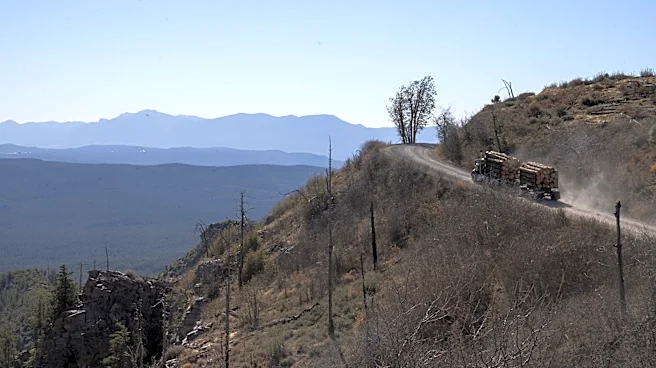
Following a significant wildfire, an urgent restoration effort is underway to rehabilitate a spring-fed creek within the Kaibab National Forest in Arizona. The fire severely impacted the area, necessitating immediate action to prevent further ecological
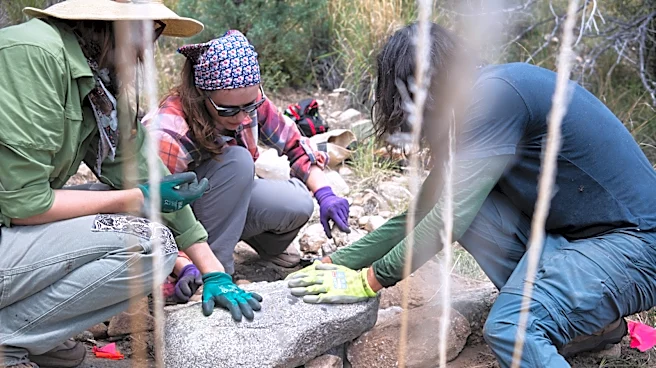
damage. Crews, including members from New Mexico and young Hopi individuals with cultural ties to the land, are actively working on the restoration. The focus is on retaining soils to support the regrowth of trees and maintain the unique wet, mixed-conifer forest ecosystem, which is rare for the region. The Forest Service plans to replant trees, particularly on north-facing slopes, to aid natural regeneration. However, there is an acknowledgment that the footprint of the wet mixed-conifer forest may shrink over time due to the region's warming and drying climate. Funding for these extensive restoration efforts is being sourced from various parts of the Kaibab's existing budget and new grants, including from the National Forest Foundation.
Why It's Important?
The restoration of the spring-fed creek in the Kaibab National Forest is crucial for several reasons, highlighting the broader challenges of wildfire recovery and ecosystem preservation in the U.S. West. The Kaibab National Forest, described as ecologically important, plays a vital role in regional biodiversity and water resources. The loss of the wet, mixed-conifer forest due to the wildfire represents a significant ecological setback, as such forests are rare and provide critical habitat and hydrological functions. The efforts to retain soil are essential to prevent erosion, which can further degrade water quality and hinder vegetation regrowth. The involvement of local communities, including young Hopi individuals, underscores the cultural significance of these lands and the importance of traditional ecological knowledge in conservation efforts. The long-term success of this restoration will serve as a case study for managing post-wildfire landscapes in a changing climate, where increasing temperatures and aridity make such ecosystems more vulnerable to severe fires.
What's Next?
The restoration efforts are expected to continue for several years, contingent on securing adequate funding and ongoing support from conservation corps. The Forest Service will monitor the replanted trees and natural regeneration, particularly focusing on the resilience of spruce in the area. Decisions regarding the extent of replanting will be guided by the likelihood of success in a warming climate, with a preference for north-facing slopes. The long-term outlook suggests a potential shift in the forest composition, with the wet mixed-conifer footprint possibly shrinking, and a greater prevalence of drier mixed or pure ponderosa stands. This will necessitate adaptive management strategies to maintain ecological integrity. Continued collaboration with organizations like the National Forest Foundation and local communities will be vital for sustained progress. The success of this project could influence future wildfire recovery strategies across other national forests facing similar environmental pressures.
Beyond the Headlines
This restoration project delves into the complex interplay between climate change, wildfire management, and ecological resilience. The acknowledgment that the wet mixed-conifer forest's footprint might shrink highlights the irreversible impacts of climate change on certain ecosystems, forcing land managers to adapt to new ecological realities rather than simply restoring to a past state. The cultural connection of the Hopi people to the Kaibab underscores the importance of integrating indigenous perspectives and traditional land management practices into modern conservation efforts. This situation also brings to light the financial strain on national forests, as they increasingly rely on grants and external funding to address the escalating costs of wildfire recovery and prevention. The long-term implications extend to regional water security, biodiversity, and the overall health of Western U.S. ecosystems, emphasizing the need for proactive climate adaptation strategies and sustained investment in natural resource management.