
What's Happening?
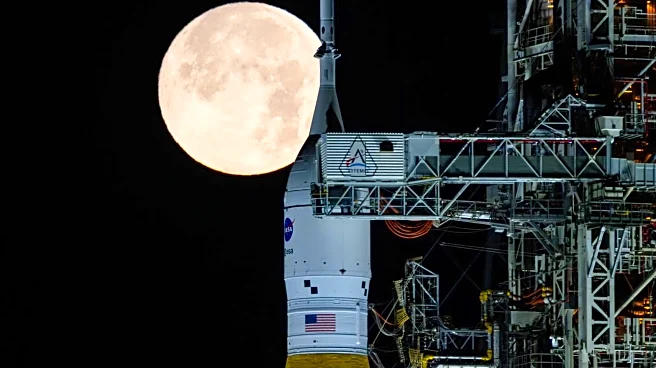
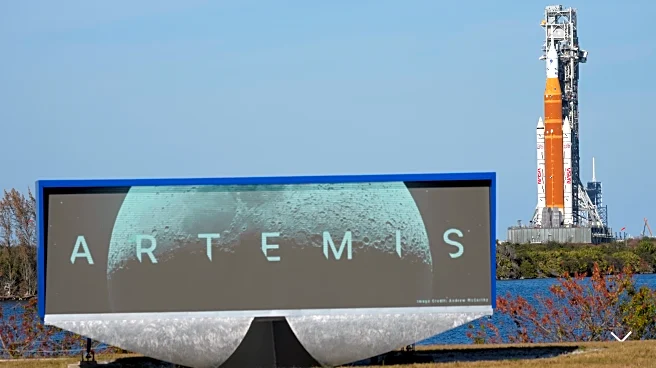
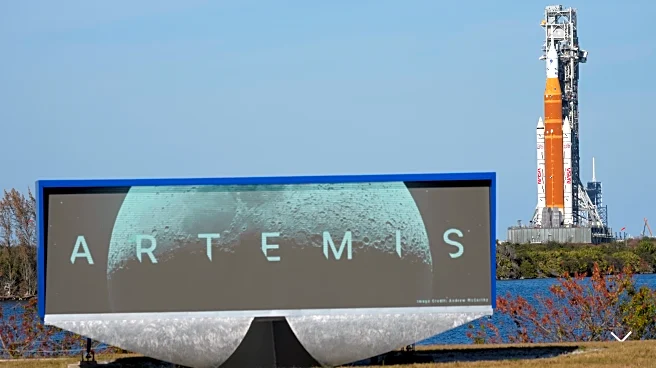
NASA has decided to roll back the Artemis 2 Space Launch System (SLS) rocket to the Vehicle Assembly Building (VAB) at Kennedy Space Center in Florida. This decision was made after a helium flow malfunction was discovered following a successful wet dress
rehearsal, where the rocket was fueled with propellants as it would be before an actual launch. Originally, NASA had planned for an early March launch window for the Artemis 2 mission, which aims to send four astronauts on a 10-day voyage around the moon and back. However, due to the need for repairs, the mission will now launch no earlier than April. The rollback of the SLS rocket, which stands 322 feet tall, was captured in a striking sunset photograph by John Kraus.
Why It's Important?
The delay of the Artemis 2 mission is significant as it impacts NASA's timeline for returning humans to the moon. The Artemis program is a critical component of NASA's long-term goals for lunar exploration and establishing a sustainable human presence on the moon. The helium flow malfunction highlights the technical challenges involved in preparing such a complex mission. The delay may affect subsequent missions in the Artemis program, potentially impacting international collaborations and partnerships. Additionally, the successful resolution of this issue is crucial for maintaining confidence in NASA's ability to execute future deep space missions.
What's Next?
NASA will focus on addressing the helium flow malfunction and ensuring the SLS rocket is ready for its rescheduled launch. The agency will conduct further tests and evaluations to prevent similar issues in the future. Once repairs are completed, NASA will aim to launch the Artemis 2 mission in April, sending a crew of four astronauts on a journey around the moon. The outcome of these efforts will be closely monitored by international partners and stakeholders involved in the Artemis program, as it sets the stage for future lunar exploration missions.