







What's Happening?
The U.S. military is undergoing a significant strategic shift, prioritizing concealment tactics for its garrisons worldwide. This change is a direct response to the evolving nature of modern warfare, characterized by the proliferation of long-range fires
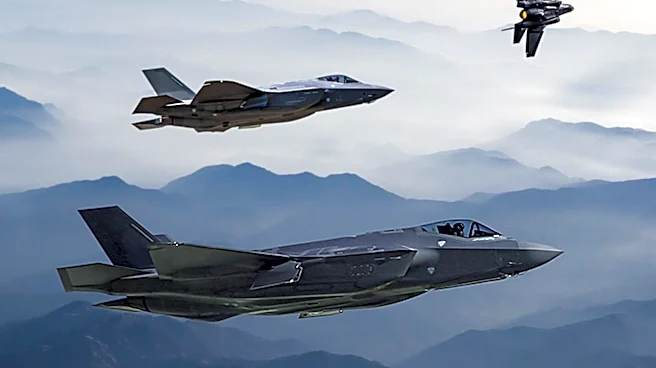
and advanced drone technology. Lieutenant General James P. Isenhower, commanding general of the Army's Combined Arms Command (CAC), emphasized that 'hiding in plain sight has become an imperative on the modern battlefield.' The military is incorporating education on electromagnetic and drone warfare into all levels of Army training. This includes teaching soldiers how to use electromagnetic data to pinpoint enemy positions while simultaneously learning to operate in such environments to avoid detection themselves. This re-evaluation of tactics comes after incidents like Iran's downing of a U.S. fighter jet using drone swarms, which highlighted vulnerabilities in traditional military postures. The previous reliance on large, easily identifiable command posts and overwhelming air superiority, common during conflicts in Iraq and Afghanistan, is now considered outdated due to the precision and reach of contemporary adversaries.
Why It's Important?
This strategic pivot is crucial for the survivability and effectiveness of U.S. military forces globally. The shift from large, centralized operations to dispersed and concealed tactics directly addresses the vulnerabilities exposed by modern adversaries equipped with long-range precision weapons and drone swarms. The U.S. military's previous operational model, which allowed for the concentration of supplies, personnel, and command centers in 'sanctuary' bases due to air dominance, is no longer viable. The new approach aims to mitigate the risk of significant losses from targeted attacks, thereby protecting personnel and critical assets. However, this dispersal comes with logistical challenges, as funneling supplies to numerous, potentially distant locations is less efficient than supplying large hubs. This trade-off between efficiency and survivability underscores the gravity of the threat and the necessity for adaptation. Furthermore, the depletion of costly interceptor munitions, as highlighted by a CSIS report indicating significant reductions in Patriot and THAAD inventories due to conflicts, makes proactive concealment an even more vital defensive strategy.
What's Next?
The U.S. military will continue to integrate advanced training in electromagnetic and drone warfare across all its branches, focusing on deceptive tactics and dispersed operations. This will likely involve further investment in technologies that enhance concealment and counter-detection capabilities, alongside a re-evaluation of base infrastructure and logistics to support a more distributed force. The Army's Combined Arms Command will play a central role in developing and disseminating new doctrines and training methodologies. Future military exercises will increasingly simulate environments where forces must operate without traditional air superiority, emphasizing the ability to 'create the benefits of mass without presenting the vulnerabilities of concentration.' This ongoing adaptation will also necessitate continuous intelligence gathering and analysis to stay ahead of evolving adversary capabilities in drone and long-range precision strike technologies. The long-term goal is to ensure U.S. forces can maintain operational effectiveness and deterrence in a contested battlespace where traditional advantages are diminishing.
Beyond the Headlines
The shift towards concealment reflects a fundamental change in the philosophy of military engagement, moving away from a posture of overt dominance to one of strategic subtlety and resilience. This evolution has broader implications for military procurement, research and development, and international alliances. It suggests a future where stealth and deception are as critical as firepower. Ethically, it raises questions about the nature of conflict in an era of pervasive surveillance and precision targeting, potentially leading to more diffuse and less conventional battlefields. Culturally, it may require a re-imagining of military heroism and strategy, emphasizing adaptability and intelligence over brute force. This strategic reorientation also highlights the continuous arms race in military technology, where advancements by one side necessitate immediate and innovative countermeasures from the other, driving a cycle of perpetual adaptation and technological innovation in national defense.