








What's Happening?
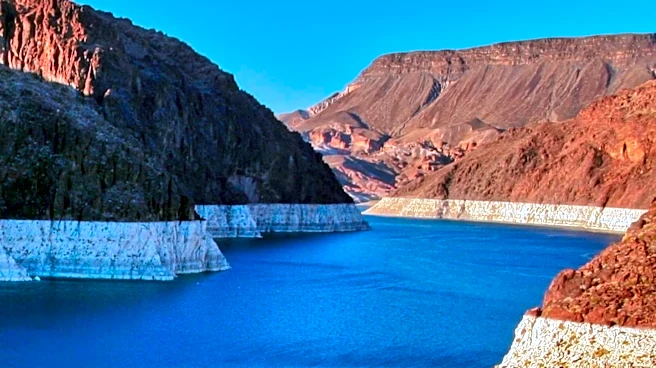
The Glen Canyon Institute has proposed a radical plan to address the ongoing water crisis affecting the Colorado River Basin by draining Lake Powell and consolidating water storage in Lake Mead. This proposal comes as both reservoirs, which are the largest
in the United States, are experiencing critically low water levels due to prolonged drought conditions. The plan suggests using Lake Powell as a backup reservoir during flood years, while primarily storing water in Lake Mead. This would involve constructing diversion tunnels around Glen Canyon Dam to allow the Colorado River to flow freely through Glen Canyon. The proposal aims to address the limitations of the current infrastructure, which was designed based on mid-20th-century expectations of river flows that have since declined significantly.
Why It's Important?
The proposal to drain Lake Powell and focus on Lake Mead is significant as it addresses the urgent need for sustainable water management in the Colorado River Basin, which supplies water to 40 million people and irrigates over 5 million acres of farmland. The current situation poses a threat to water security and hydropower generation, as declining water levels at Glen Canyon Dam risk its ability to produce electricity. By consolidating water storage, the plan aims to optimize the use of available resources and ensure a more reliable water supply. This could have far-reaching implications for agricultural stakeholders, urban water users, and energy production in the region.
What's Next?
If the proposal gains traction, it could lead to significant changes in water management policies and infrastructure investments in the Colorado River Basin. Stakeholders, including federal water managers and local governments, will need to evaluate the feasibility and potential impacts of such a plan. The proposal may also prompt discussions on long-term strategies for adapting to climate change and ensuring water security in the West. As the region continues to experience warmer temperatures and variable precipitation, the need for innovative solutions to manage water resources becomes increasingly critical.