



What's Happening?
As concerns over cell phone use in classrooms grow, the Opal app offers an alternative to outright bans. Kenneth Schlenker, CEO of San Francisco-based Opal, argues that banning phones does not teach students how to manage their devices responsibly. Instead,
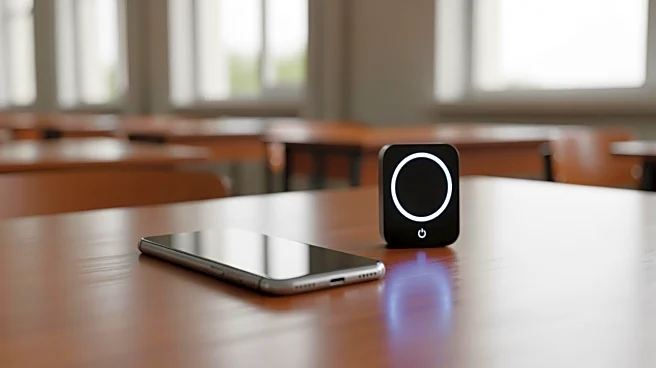
Opal provides tools to help students develop healthy phone habits by blocking distracting apps like social media and games during school hours. The app allows students to scan a QR code upon entering school, which restricts access to certain apps, and unlocks them when they leave. This approach aims to give students agency over their phone use, promoting self-regulation rather than enforcing strict bans. Schools like Harvard-Westlake in Los Angeles have adopted Opal's system, allowing students to possess and use their devices appropriately.
Why It's Important?
The debate over cell phone use in schools reflects broader concerns about technology's impact on education and student well-being. While some advocate for strict bans to minimize distractions, others argue for teaching responsible use. Opal's approach aligns with the latter, emphasizing the development of self-control and autonomy in students. This method could potentially lead to better long-term outcomes, as students learn to balance technology use with academic responsibilities. The app's adoption by schools indicates a shift towards integrating technology management into education, which could influence future policies and practices in educational institutions across the U.S.
Beyond the Headlines
The use of apps like Opal in schools raises questions about privacy and data security, as well as the role of technology in education. While the app aims to empower students, it also involves monitoring and regulating their phone use, which could lead to concerns about surveillance and data collection. Additionally, the effectiveness of such tools in fostering genuine behavioral change remains to be seen. As schools continue to navigate the challenges of technology integration, finding a balance between control and autonomy will be crucial in shaping the future of education.