

What's Happening?
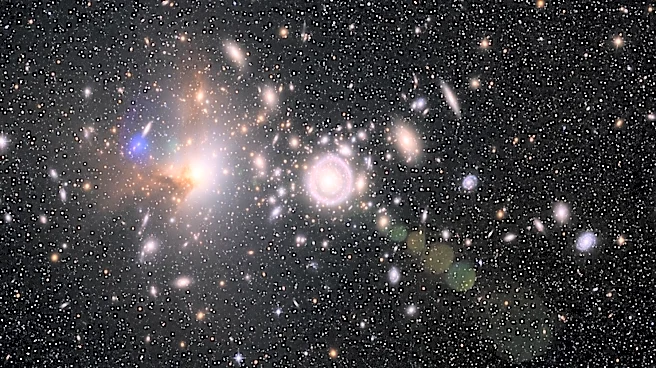
In December 1995, the Hubble Space Telescope embarked on a groundbreaking mission by focusing on a seemingly empty patch of sky for ten days. This initiative, led by Robert Williams, then director of the Space Telescope Science Institute, aimed to capture
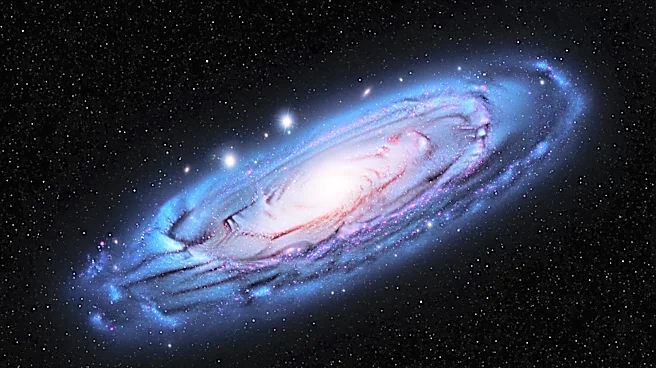
faint and distant galaxies by clearing the foreground of bright objects. The resulting image, known as the Hubble Deep Field, revealed nearly 3,000 galaxies, challenging previous assumptions about the universe's structure. The decision to undertake this project was controversial, as it utilized a significant portion of the telescope's observing time, which was a scarce and highly contested resource. Despite initial skepticism from senior astronomers, the project demonstrated the potential of long-exposure observations in uncovering the universe's hidden depths.
Why It's Important?
The Hubble Deep Field project significantly advanced our understanding of the universe by providing direct visual evidence of galaxies from billions of years ago. This discovery supported the theory that galaxies evolve through collisions and mergers over time. The project's success also validated the use of long-exposure techniques in astronomical research, paving the way for future deep field observations. By releasing the data to the global astronomical community, the project fostered widespread scientific collaboration and innovation. The findings have implications for cosmology, as they offer insights into the early universe's structure and the processes that shaped it. This project set a precedent for future space telescopes, such as the James Webb Space Telescope, to explore even earlier cosmic times.
What's Next?
Following the success of the Hubble Deep Field, similar projects have been conducted, including the Hubble Ultra Deep Field and observations by the James Webb Space Telescope. These initiatives aim to push the boundaries of our cosmic understanding by capturing images of galaxies from even earlier periods in the universe's history. The ongoing analysis of these deep field images continues to refine our models of galaxy formation and evolution. As technology advances, future telescopes may provide even more detailed insights into the universe's origins, potentially answering fundamental questions about the nature of dark matter and dark energy.
Beyond the Headlines
The Hubble Deep Field project highlights the importance of taking calculated risks in scientific exploration. By challenging conventional wisdom and investing in seemingly uncertain ventures, researchers can achieve groundbreaking discoveries. This project also underscores the value of open data sharing in the scientific community, as it allows for diverse analyses and interpretations that can lead to new insights. The success of the Hubble Deep Field has inspired a new generation of astronomers to pursue ambitious projects that push the limits of our knowledge about the universe.