




What's Happening?
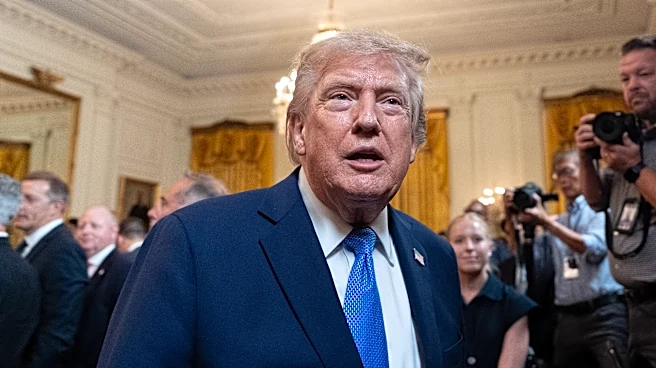
Recent polling data indicates that President Trump's approval rating has been declining, with figures from various sources showing it in the low to mid 30s. For instance, a Quinnipiac University poll and an AP-NORC poll both found approval ratings around
32-33% in July, while disapproval ratings consistently exceeded 60%. The Economist's YouGov polling tracker reported a net approval rating of -25 in early August. Despite Trump's claims that his polling numbers are the best they have ever been, these figures suggest a significant portion of the electorate is dissatisfied with his performance.
Why It's Important?
The decline in President Trump's approval ratings could have significant implications for the Republican Party and its prospects in upcoming elections. With midterm elections approaching, the party faces the challenge of maintaining its majority in Congress amidst growing public dissatisfaction. The polling data suggests that voters are increasingly critical of Trump's policies, particularly in light of recent events such as the U.S.-Israel attack on Iran and the partial government shutdown. This dissatisfaction may influence voter turnout and preferences, potentially benefiting Democratic candidates.
What's Next?
As the midterm elections draw closer, the Republican Party will need to strategize on how to address the declining approval ratings of President Trump. Efforts may include distancing congressional candidates from Trump's policies or emphasizing local issues to mitigate the impact of national discontent. Additionally, the party may focus on mobilizing its base to ensure voter turnout, especially in competitive districts. The outcome of these elections could reshape the political landscape and influence legislative priorities in the coming years.