


What's Happening?
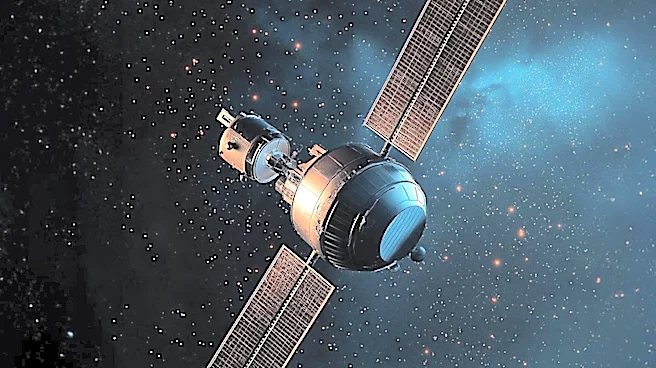
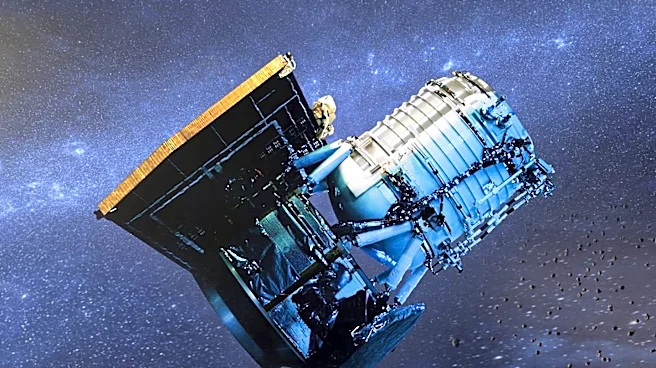
NASA's Nancy Grace Roman Space Telescope, set to launch at the end of August, is poised to play a crucial role in detecting potentially hazardous asteroids. The telescope, primarily designed for dark energy research, will also assist in identifying asteroids that
pose a threat to Earth. By working in conjunction with other telescopes like the Near-Earth Object (NEO) Surveyor and the Vera Rubin Observatory, Roman will help refine asteroid orbit predictions and improve detection accuracy. This collaboration aims to enhance planetary defense efforts by providing more precise data on asteroid sizes and compositions.
Why It's Important?
The integration of the Roman Telescope into asteroid detection efforts represents a significant advancement in planetary defense. With the ability to detect asteroids in infrared, Roman will provide critical data that can help scientists assess the potential impact of these celestial bodies. This information is vital for developing strategies to deflect or mitigate the effects of an asteroid collision with Earth. The collaboration between multiple telescopes underscores the importance of a coordinated approach to space observation, which is essential for protecting the planet from cosmic threats.
What's Next?
Following its launch, the Roman Telescope will begin its mission to observe the cosmos and contribute to asteroid detection. As it collaborates with other observatories, the data collected will be used to refine models of asteroid orbits and improve impact predictions. This ongoing research will inform future planetary defense strategies and potentially lead to the development of new technologies for asteroid deflection. The success of this initiative could pave the way for further international cooperation in space observation and planetary protection.