



What's Happening?
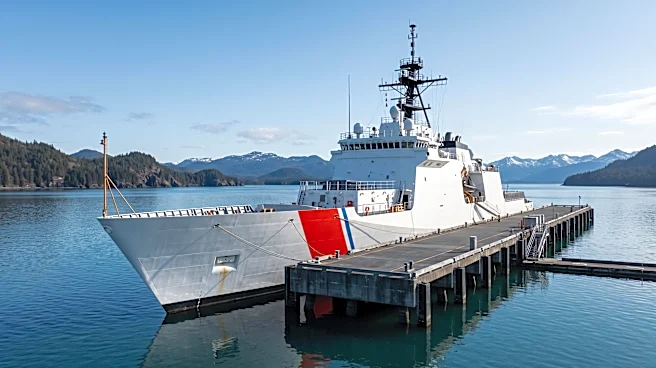
The U.S. Coast Guard has awarded a $315 million contract for the design and construction of a new cutter mooring and fuel pier at Coast Guard Base Kodiak, Alaska. This significant investment aims to upgrade the base's infrastructure to support new cutters
and icebreakers, which are crucial for America's long-term Arctic strategy. The Alaska congressional delegation, including Senators Dan Sullivan and Lisa Murkowski, and Congressman Nick Begich, played a key role in securing the necessary funding through legislation such as the 2025 Working Families Tax Cuts Act, FY 2023 Major Acquisition Systems Infrastructure legislation, and the 2022 Infrastructure Investment and Jobs Act. The project will encompass waterfront improvements, a new fueling utility building, installation of utilities, cutter shore ties, safety equipment, and unexploded ordnance removal. This development is part of a broader effort to modernize the Coast Guard's presence in Alaska, with additional investments in icebreakers, patrol cutters, aircraft, and shoreside infrastructure.
Why It's Important?
This $315 million contract is a critical step in enhancing U.S. national security and economic interests in the Arctic region. The modernization of Coast Guard Base Kodiak will significantly strengthen the operational capabilities of the Coast Guard, allowing it to effectively carry out its missions across Alaska and the Arctic. As the Arctic becomes increasingly accessible due to climate change, its strategic importance for shipping, resource extraction, and geopolitical influence is growing. The improved infrastructure will support the homeporting of new icebreakers and offshore patrol cutters, which are essential for maintaining sovereignty, conducting search and rescue operations, and protecting vital maritime routes. This investment also has substantial economic benefits for Alaska, creating jobs and stimulating local economies in Kodiak and other communities receiving Coast Guard investments. It underscores a commitment to bolstering the U.S. presence and readiness in a region that is rapidly becoming a focal point of international attention.
What's Next?
The project will proceed with the design and construction phases of the cutter mooring and fuel pier at Coast Guard Base Kodiak. This will involve detailed planning, environmental assessments, and the commencement of physical construction, including waterfront improvements and the installation of new facilities. The Alaska congressional delegation will likely continue to monitor the progress of this project and advocate for further investments in the region's defense and infrastructure. The enhanced capabilities at Kodiak will facilitate the deployment and maintenance of new Coast Guard assets, including the two new icebreakers slated for homeporting in Kodiak and a third in Seward. This modernization is expected to attract more Coast Guard personnel and their families to Alaska, further integrating the military presence with local communities. The long-term goal is to ensure the U.S. Coast Guard is fully equipped to address the evolving challenges and opportunities in the Arctic.
Beyond the Headlines
Beyond the immediate strategic and economic benefits, this investment in Coast Guard Base Kodiak reflects a broader geopolitical shift towards the Arctic. The U.S. is increasingly recognizing the need to assert its presence and capabilities in a region where other global powers are also expanding their influence. The modernization of Kodiak is not just about supporting new vessels; it's about projecting power, ensuring maritime domain awareness, and protecting U.S. interests in a contested and rapidly changing environment. The project also highlights the intricate relationship between national security and climate change, as melting ice opens new sea lanes and necessitates enhanced operational capabilities. Furthermore, the collaboration between the Coast Guard and the Alaska congressional delegation underscores the importance of bipartisan support for critical infrastructure and defense initiatives, particularly in strategically vital regions. This investment sets a precedent for future federal spending aimed at securing the U.S.'s position in the Arctic.