
What's Happening?
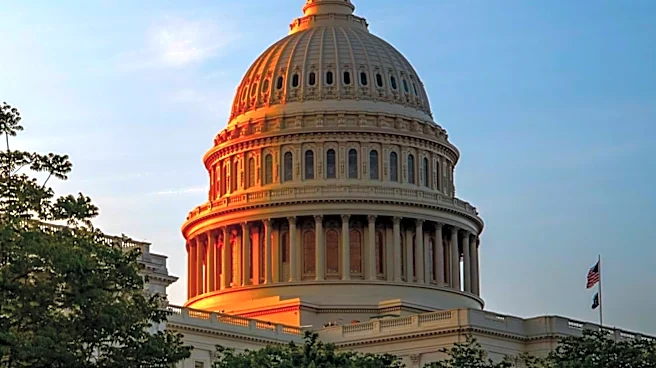
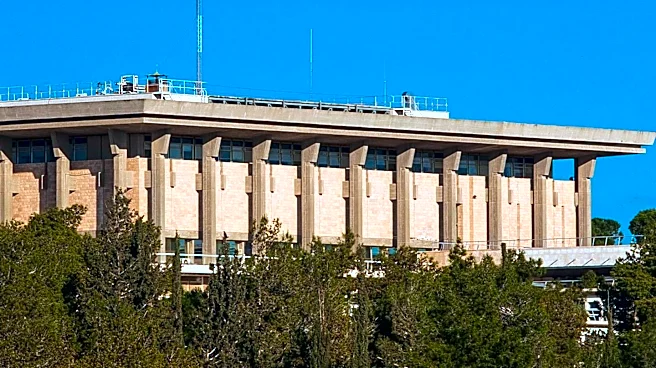
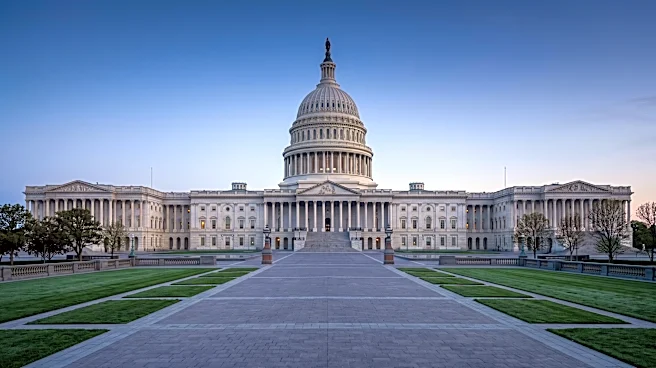
The U.S. House of Representatives has passed HR 4795, a bill that would prevent federal funds from being allocated to academic institutions engaging in commercial boycotts against Israel. The 'Protect
Economic and Academic Freedom Act' passed with 237 votes to 169, with support from 203 Republicans, 33 Democrats, and one independent. If enacted, the bill would amend the Higher Education Act of 1965, requiring universities to certify that they do not participate in non-expressive commercial boycotts of Israel to maintain access to certain federal funds. The legislation also mandates that institutions certify students are not unreasonably hindered from participating in academic programs in Israel. Co-sponsored by North Carolina Republican Virginia Foxx and New Jersey Democrat Josh Gottheimer, the bill aims to counter the Boycott, Divestment, and Sanctions (BDS) movement on college campuses. A 2022 U.S. Court of Appeals ruling clarified that economic boycotts are considered non-expressive commercial conduct, distinct from protected symbolic speech.
Why It's Important?
This legislative action is significant as it directly addresses the BDS movement within U.S. academic institutions, potentially impacting their funding and operational autonomy. Proponents argue it safeguards academic freedom for students and counters what they perceive as discriminatory practices against Israel. Organizations like the Anti-Defamation League (ADL) and the Movement to Combat Antisemitism have welcomed the bill, asserting that the BDS movement delegitimizes Israel and can lead to antisemitism on campuses. The bill's passage in the House reflects a bipartisan effort to support Israel, although some Jewish lawmakers, including Lois Frankel and Jared Moskowitz, voted in favor. However, the legislation also raises concerns about First Amendment rights and academic freedom, with critics arguing that it could stifle free speech and set a dangerous precedent by penalizing universities for expressing opposition to certain policies. The debate highlights the tension between protecting academic institutions and addressing geopolitical issues through economic measures.
What's Next?
The bill now moves to the Senate, where its future is uncertain, as it remains to be seen if Democrats will provide the necessary votes for its final approval. Representative Josh Gottheimer has expressed his intention to push the Senate to take up the bill soon. If it becomes law, academic institutions receiving federal funds would need to adjust their policies to comply with the new requirements regarding boycotts of Israel and student access to Israeli academic programs. This could lead to legal challenges from organizations and individuals who view the bill as an infringement on First Amendment rights. The implementation of the law would likely spark further debate and potential protests on college campuses, as well as discussions among university administrations about how to navigate the new regulations while upholding principles of academic freedom and free speech. The outcome in the Senate will determine the immediate impact on U.S. higher education and the ongoing discourse surrounding the BDS movement.
Beyond the Headlines
Beyond the immediate legislative impact, this bill touches upon deeper issues concerning free speech, academic freedom, and the role of political activism on university campuses. Critics, such as New York Democratic Representative Jerry Nadler and the liberal pro-Israel organization J Street, argue that while they may disagree with the BDS movement, individuals have a First Amendment right to engage in such activities. They contend that penalizing universities for economic boycotts could create a chilling effect on legitimate forms of protest and expression, potentially undermining the foundational principles of academic discourse. The distinction between expressive and non-expressive commercial conduct, as defined by the courts, is central to this debate, highlighting the complexities of regulating economic actions that carry political messages. This legislation could also influence the broader landscape of U.S.-Israel relations, signaling a stronger stance against anti-Israel boycotts and potentially affecting international academic collaborations and exchanges. The long-term implications could include a re-evaluation of how universities balance their institutional values with federal funding requirements and political pressures.