





What's Happening?
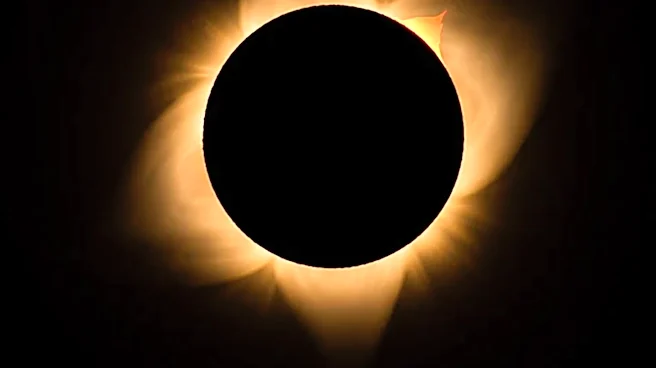
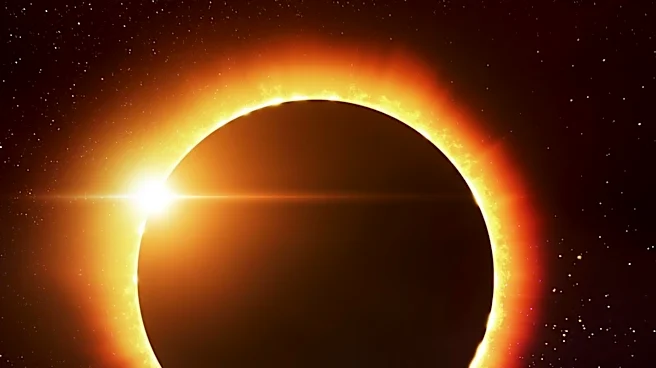
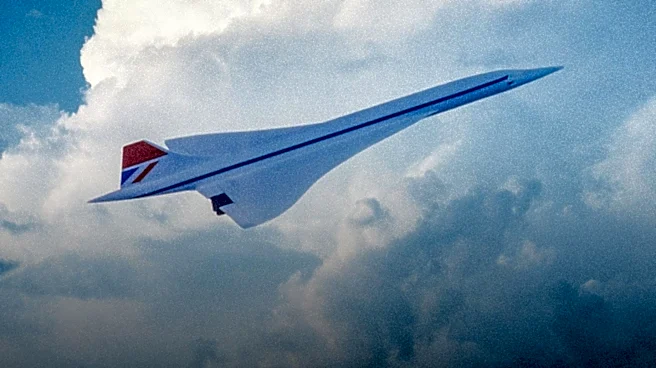
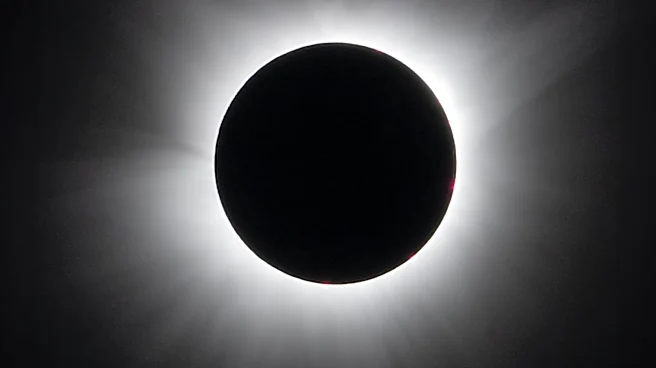
In 1973, a Concorde aircraft set a world record by observing a total solar eclipse for 74 minutes, flying at more than twice the speed of sound. The project, initiated by Pierre Léna, involved scientists from various institutions, including the Paris
Observatory and the French National Centre for Scientific Research. The Concorde's speed allowed the team to study the solar corona at different wavelengths, providing valuable data on infrared radiation, oscillating hot gas, and the chromosphere. This historic flight demonstrated the potential of using high-speed aircraft for astronomical observations, offering insights into solar phenomena.
Why It's Important?
The Concorde's eclipse chase represents a significant achievement in scientific exploration, showcasing the innovative use of technology to extend the duration of astronomical observations. By leveraging the aircraft's speed, researchers were able to gather unprecedented data on the solar corona, contributing to our understanding of solar dynamics. This endeavor highlights the intersection of aviation and science, illustrating how technological advancements can enhance research capabilities. The project also underscores the importance of international collaboration in scientific pursuits, as experts from multiple countries worked together to achieve this milestone.