







What's Happening?
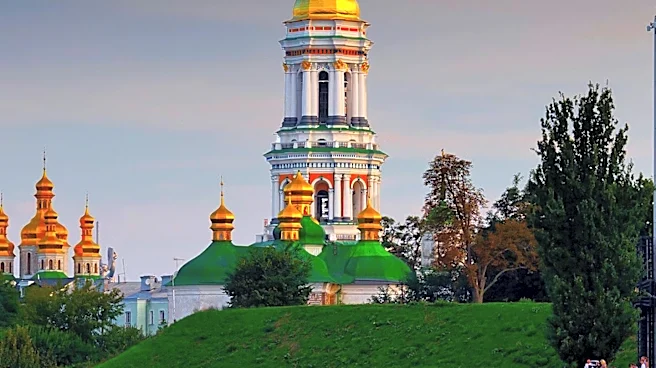
Switzerland has announced it will provide 600,000 Swiss francs, equivalent to approximately $730,000, through UNESCO to aid in the preservation and restoration of the Kyiv-Pechersk Lavra. This significant cultural and religious site in Ukraine sustained
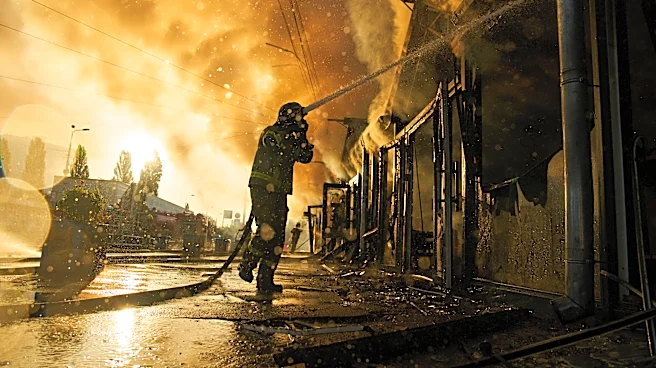
damage during a Russian attack in June. Swiss Federal Council Delegate Jacques Gerber confirmed this commitment on August 16. The attack, which occurred on June 15, involved a Russian Shahed-type drone striking the Lavra's Dormition Cathedral, a part of the UNESCO World Heritage Site. While the strike caused damage to sections of the cathedral, firefighters were able to contain the resulting blaze before it led to major structural harm. Following the incident, Ukrainian President Volodymyr Zelensky discussed the restoration efforts with Swiss President Guy Parmelin, who agreed to assist. This contribution is part of Switzerland's broader financial support for Ukraine's recovery and reconstruction, which totals 5 billion Swiss francs ($6.1 billion) through 2036, with 1.5 billion francs ($1.8 billion) allocated through 2028.
Why It's Important?
This Swiss financial commitment is important as it underscores international solidarity in preserving cultural heritage amidst conflict. The Kyiv-Pechersk Lavra is not merely a historical monument but a profound symbol of Ukraine's identity and religious heritage. Its restoration, supported by international partners like Switzerland, sends a clear message against the destruction of cultural sites during wartime. For Ukraine, this aid is crucial for repairing tangible damage and for reinforcing national morale by protecting its historical narrative. For Switzerland, a nation historically known for its military neutrality, this action demonstrates a continued commitment to humanitarian and reconstruction assistance, aligning with its adoption of EU sanctions against Russia and the freezing of Russian assets. This support helps to mitigate the long-term cultural and psychological impacts of the conflict, ensuring that significant landmarks are not permanently lost. It also highlights the role of international organizations like UNESCO in coordinating efforts to safeguard global heritage.
What's Next?
The immediate next steps will involve the allocation of the 600,000 Swiss francs through UNESCO to commence the preservation and restoration work at the Kyiv-Pechersk Lavra. This will likely entail detailed assessments of the damage, planning of conservation strategies, and the execution of repair efforts by specialized teams. The broader commitment of 5 billion Swiss francs through 2036 indicates ongoing support for Ukraine's reconstruction, suggesting that further projects and aid initiatives will be rolled out in phases. This long-term engagement will likely focus on various sectors beyond cultural heritage, including infrastructure, humanitarian aid, and economic recovery. The continued collaboration between Switzerland, Ukraine, and international bodies like UNESCO will be essential in ensuring the effective implementation of these reconstruction efforts. This also sets a precedent for other nations to contribute to the preservation of cultural sites in conflict zones.
Beyond the Headlines
Beyond the immediate restoration, Switzerland's contribution to the Kyiv-Pechersk Lavra carries deeper implications regarding the protection of cultural heritage in modern warfare. The targeting of cultural sites, whether intentional or collateral, is a tactic that aims to erode a nation's identity and historical memory. By actively supporting the restoration, Switzerland and UNESCO are not only repairing physical damage but also reaffirming the universal value of cultural heritage and the importance of its safeguarding, even in times of conflict. This act can be seen as a form of cultural diplomacy, fostering international cooperation and demonstrating a commitment to shared human values. It also highlights the evolving nature of neutrality, where countries like Switzerland, while maintaining military non-alignment, are increasingly engaging in robust humanitarian and reconstruction efforts. This approach challenges the traditional confines of neutrality, showcasing a more active role in global stability and cultural preservation.