




What's Happening?
Recent research has unveiled that the Yellowstone supervolcano's activity is primarily driven by shifts in Earth's crust rather than a deep magma source as previously believed. This study, published in the journal Science, challenges the traditional understanding
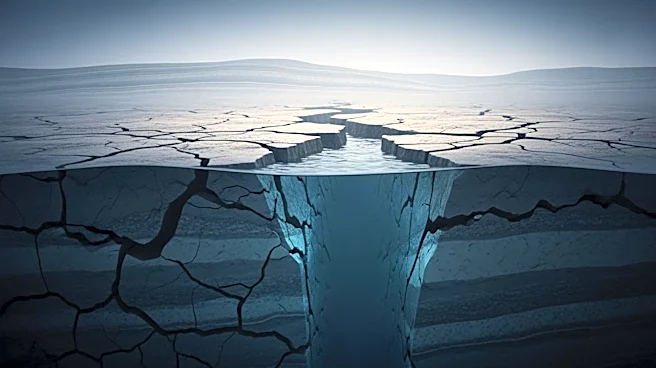
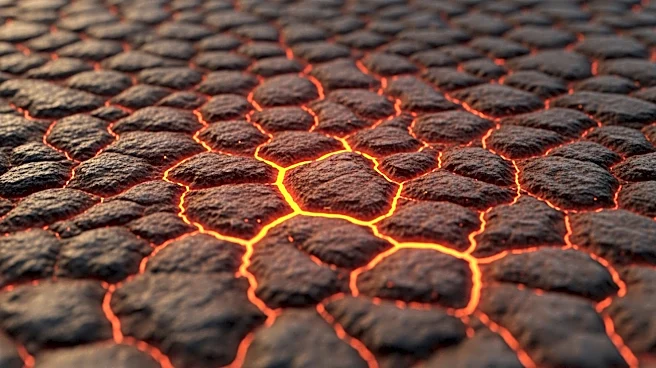
of Yellowstone's magma plumbing system. The research team, led by Lijun Liu from the Chinese Academy of Sciences, utilized a 3D model incorporating tectonic plate movements and mantle structure data to demonstrate that tectonic forces, rather than a mantle plume, control the magma reservoirs beneath Yellowstone. This finding suggests that the volcanic activity is influenced by the stretching of the lithosphere and the sinking of the Farallon slab, which affects the magma's path and behavior.
Why It's Important?
This discovery has significant implications for predicting future volcanic activity at Yellowstone and potentially other volcanic systems worldwide. Understanding that tectonic forces, rather than a deep mantle plume, drive the volcanic activity could lead to more accurate models for forecasting eruptions. This knowledge is crucial for public safety and preparedness, as Yellowstone's supervolcano has the potential to cause widespread disruption. Additionally, the study's methodology could be applied to other volcanic regions, improving global volcanic hazard assessments and contributing to a better understanding of volcanic systems.
What's Next?
The research suggests that future eruption models for Yellowstone need to incorporate these new findings about the magma plumbing system. Scientists may focus on further refining these models to enhance prediction accuracy. Additionally, the study's approach could be extended to other volcanic systems, such as Toba in Southeast Asia and Taupo in New Zealand, to improve understanding and monitoring of these regions. Ongoing research and monitoring will be essential to assess the potential risks and prepare for any future volcanic activity.