







What's Happening?
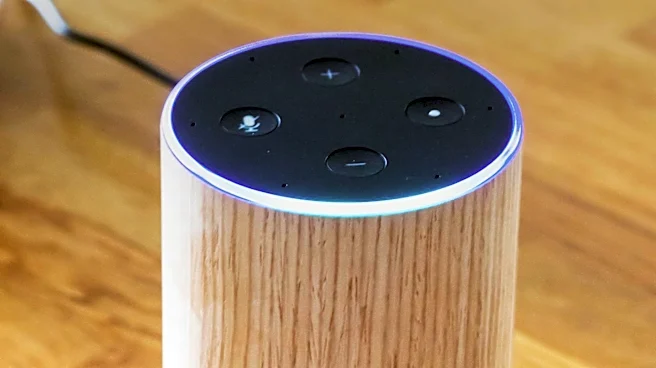
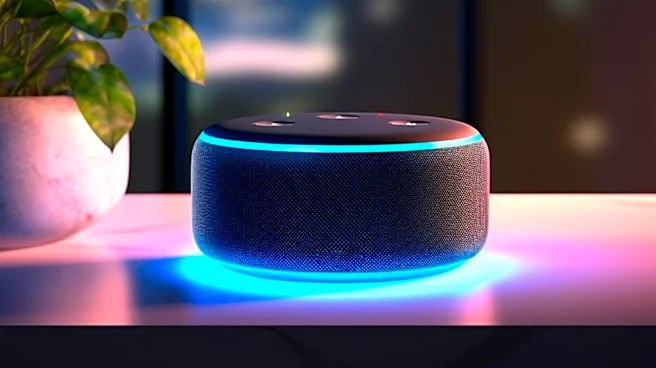
Amazon has introduced an updated version of its Echo Dot speaker, now featuring a built-in smart home hub and the capability to extend existing eero Wi-Fi networks. Priced at $99.99 in the U.S., this marks the first Echo Dot model to include a smart home hub,
supporting Zigbee, Matter, and Thread protocols. This integration allows users to connect and control compatible smart home devices without needing a separate hub. Additionally, the speaker can add up to 1,000 square feet of coverage to an existing eero network, although this is a maximum figure and not guaranteed for all homes. The new Echo Dot also boasts a redesigned speaker with 50% more bass, an AZ3 processor for on-device processing, and a fourth microphone to improve Alexa's ability to hear commands in noisy environments. Its Omnisense platform can detect room conditions like temperature and presence to trigger smart home actions.
Why It's Important?
This enhancement to the Amazon Echo Dot significantly broadens its utility beyond a simple smart speaker, positioning it as a central component of a connected home ecosystem. By integrating a smart home hub and Wi-Fi extender into an affordable device, Amazon is making smart home technology more accessible and convenient for a wider consumer base. This move intensifies competition in the smart home market, particularly against rivals like Apple and Google, by offering a more comprehensive solution in a single device. The support for multiple protocols (Zigbee, Matter, Thread) ensures broader compatibility with various smart home devices, reducing fragmentation for users. The added eero Wi-Fi extension capability addresses a common pain point for many households—poor Wi-Fi coverage—further solidifying the Echo Dot's value proposition and potentially driving increased adoption of Amazon's smart home and networking products.
What's Next?
The new Amazon Echo Dot is currently available for purchase in the U.S. The market will observe how consumers respond to the integrated hub and Wi-Fi extension features, particularly in comparison to dedicated smart home hubs and mesh Wi-Fi systems. Amazon's strategy of bundling more functionalities into its Echo devices suggests a continued push towards creating a seamless and integrated smart home experience. Future iterations of Echo devices may see further advancements in AI processing, sensor technology, and interoperability with an even broader range of smart home products. The success of this model could also influence other tech companies to integrate similar multi-functional capabilities into their entry-level smart home devices, fostering a more competitive and innovative market.
Beyond the Headlines
The integration of a smart home hub and Wi-Fi extender into a single device like the Echo Dot raises questions about potential data privacy and security implications. As more household functions become centralized through one device, the amount of data collected and processed by Amazon could increase, prompting concerns about user privacy and data protection. Furthermore, the device's ability to detect room temperature and presence, while convenient for automation, could also be perceived as an increased level of surveillance within the home. The affordability and widespread availability of the Echo Dot mean that these advanced capabilities will reach a large audience, making the ethical considerations around smart home data collection and usage even more critical for both consumers and regulators.