








What's Happening?
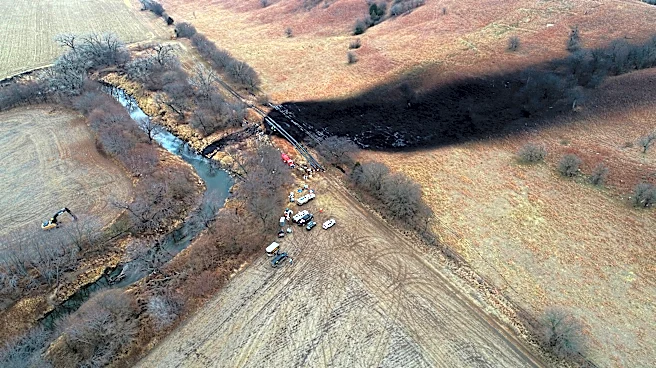
The operator of the Keystone pipeline system, South Bow, has agreed to a proposed legal settlement with the U.S. government, which includes a $26.9 million civil penalty. This settlement addresses a major oil spill that occurred in December 2022 in Kansas,
where nearly 13,000 barrels of heavy crude oil were released into a creek in Washington County. The spill was the largest onshore crude pipeline spill in the U.S. in nine years. The U.S. Environmental Protection Agency and the state of Kansas alleged that South Bow violated clean-water laws. In addition to the penalty, South Bow is expected to spend approximately $40 million on measures to prevent future accidents. The company will also pay over $3 million to Kansas for environmental restoration projects. The spill affected more than 2,700 animals, including the endangered long-eared bat, and required extensive cleanup efforts, which were completed by early 2024.
Why It's Important?
This settlement highlights the significant environmental and regulatory challenges associated with pipeline operations in the U.S. The financial penalties and required preventive measures underscore the serious consequences of environmental violations. The incident has drawn attention to the risks of transporting heavy crude oil and the potential impact on local ecosystems and wildlife. The settlement also reflects the ongoing tension between energy infrastructure development and environmental protection, a key issue in U.S. energy policy. The approval of a new pipeline project by President Trump, despite previous environmental concerns, further illustrates the complex balance between energy needs and environmental stewardship.
What's Next?
The proposed settlement is subject to approval by a judge following a 30-day public comment period. If approved, South Bow will implement the agreed-upon preventive measures to enhance pipeline safety. The case may influence future regulatory actions and industry practices regarding pipeline safety and environmental compliance. Stakeholders, including environmental groups and local communities, are likely to monitor the implementation of these measures closely. The outcome could also impact future pipeline projects and the regulatory landscape for energy infrastructure in the U.S.