







What's Happening?
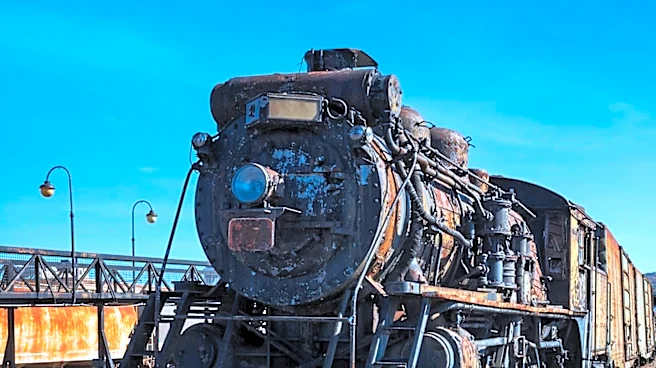
Union Pacific Railroad's Big Boy No. 4014, the world's largest operating steam locomotive, is currently touring the United States as part of the celebrations for America's 250th anniversary. The locomotive, which is 133 feet long and weighs 1.2 million
pounds, has been drawing large crowds as it travels across the country. The tour included a stop in Philadelphia over the July 4th weekend, where attendees braved extreme heat to witness the historic train. The Big Boy, originally built between 1941 and 1944 to haul freight through the Wasatch Mountains, was restored under the supervision of Ed Dickens, senior manager of Union Pacific's Heritage Operations. The locomotive is manually operated and has become a significant attraction, with many people traveling to see it and take photographs.
Why It's Important?
The tour of Big Boy No. 4014 is significant as it not only celebrates a milestone in American history but also highlights the enduring fascination with historical engineering feats. The locomotive serves as a reminder of the industrial advancements that have shaped the nation's infrastructure and economy. For Union Pacific, this tour is an opportunity to engage with the public and promote its heritage operations, fostering a sense of nostalgia and appreciation for the history of rail transport in the U.S. The event also has economic implications, as it draws tourism and boosts local economies in the cities it visits. Additionally, it provides educational opportunities for younger generations to learn about the history and mechanics of steam locomotives.
What's Next?
Following its stop in Philadelphia, Big Boy No. 4014 will continue its journey back to Wyoming, with scheduled stops in several states including Pennsylvania, Ohio, Illinois, Missouri, Kansas, and Colorado. The tour is expected to continue drawing large crowds, and Union Pacific has emphasized the importance of safety for spectators, advising them to maintain a safe distance from the tracks. The ongoing tour will likely continue to generate interest and media coverage, further solidifying the locomotive's status as a cultural and historical icon.