






What's Happening?
Pearl Diagnostics (PearlDX) has announced the publication of clinical studies in the peer-reviewed journal Clinical Infectious Diseases, supporting the U.S. Food and Drug Administration (FDA) 510(k) clearance of its MycoMEIA® Aspergillus Assay. This urine-based
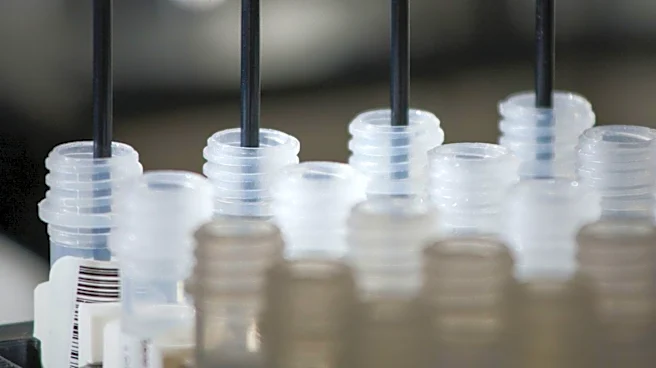
assay is designed to aid in the diagnosis of invasive aspergillosis (IA), a severe fungal infection that can be life-threatening for individuals with compromised immune systems. The published case-control study involved 50 patients with confirmed or probable IA and 240 control subjects. The MycoMEIA assay demonstrated a 92% sensitivity, with at least one positive result in 46 of the 50 IA patients, and an 87.6% specificity across 249 control urine samples. Notably, among 24 patients whose infection was established through invasive lung sampling but had negative serum galactomannan tests, 19 showed at least one positive MycoMEIA result. The publication also includes findings from a prospective study confirming comparable specificity with fresh urine samples and high reproducibility across multiple laboratories.
Why It's Important?
The publication of these clinical studies is crucial as it provides clinicians with comprehensive evidence supporting the MycoMEIA assay's efficacy and its role as a non-invasive diagnostic tool for invasive aspergillosis. This assay is the first urine-based test to receive FDA clearance for IA diagnosis, offering a significant advancement over traditional methods that often require invasive procedures. The high sensitivity of the MycoMEIA assay, particularly in cases where blood-based tests might be negative, enhances diagnostic certainty and could lead to earlier detection of infection. Early and accurate diagnosis of IA is critical for timely initiation of antifungal treatment, which can significantly improve patient outcomes and reduce mortality rates in vulnerable populations. This innovation aligns with PearlDX's broader objective of simplifying the identification of serious lung infections through non-invasive testing, leveraging decades of research into microbial extracellular vesicles.
What's Next?
PearlDX plans to present additional clinical data on the MycoMEIA assay at IDWeek 2026. This presentation, titled “Performance of Urine MycoMEIA – Aspergillus with Serum Galactomannan Testing as an Aid to Diagnose Invasive Aspergillosis,” will occur on Thursday, October 22, 2026, from 12:15 p.m. to 1:30 p.m. ET at the Walter E. Washington Convention Center. This upcoming presentation will further disseminate the assay's capabilities and clinical utility to a broader audience of infectious disease specialists and healthcare professionals. The company will likely continue its efforts to integrate the MycoMEIA assay into standard clinical practice, potentially expanding its reach in both U.S. and international markets, given its CE-mark approval. Future developments may include further research into the assay's application for other fungal and bacterial infections, leveraging its proprietary Smart Antibody™ technology.
Beyond the Headlines
The development of the MycoMEIA Aspergillus Assay represents a significant shift in diagnostic approaches for invasive fungal infections, moving towards less invasive and potentially more accessible testing methods. This innovation could reduce the burden on patients by minimizing the need for painful and risky procedures like lung biopsies. From a broader healthcare perspective, widespread adoption of such non-invasive tests could lead to more efficient resource allocation in hospitals and clinics, as well as a reduction in healthcare costs associated with complex diagnostic pathways. The underlying technology, which detects fungal antigens associated with Aspergillus extracellular vesicles in urine, opens new avenues for diagnostic research, suggesting that similar approaches could be developed for a range of other difficult-to-diagnose infections. This could fundamentally change how clinicians approach the diagnosis and management of infectious diseases, emphasizing early, non-invasive detection.