








What's Happening?
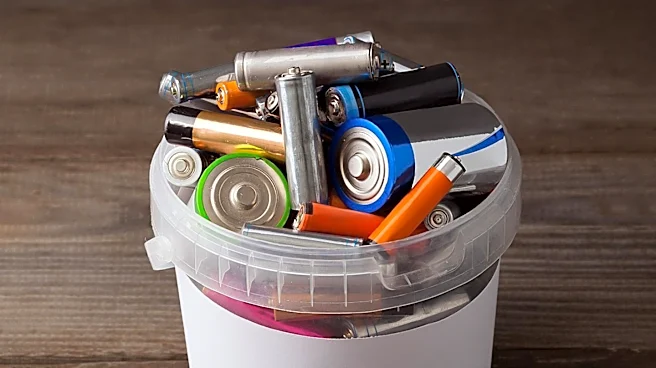
The European Union has set a new target for the collection of waste portable batteries, aiming for a 63% collection rate by the end of 2027. This new target, established under the Batteries Regulation, represents a significant increase from the 45% minimum
under the previous Batteries Directive methodology. According to Eurostat, the EU's collection rate for waste portable batteries in 2023 was 48.8%, falling 14.2 percentage points short of the upcoming 2027 goal. The comparison is complicated by a change in the calculation method for the new target, which now uses the average weight of batteries made available to end-users in the three preceding years, excluding the reporting year. This differs from the former Directive's method, which included the reporting year. Additionally, the growing share of longer-lived lithium-ion batteries in the market presents a challenge, as these batteries remain in use longer, delaying their entry into the waste stream and potentially skewing collection rates based on recent sales. The EU legislation acknowledges this issue, empowering the European Commission to amend the methodology and target by August 18, 2027, to better reflect the actual volume of waste portable batteries available for collection.
Why It's Important?
This new, more ambitious collection target for portable batteries in the EU underscores a critical shift towards enhanced environmental responsibility and resource management. The move to a 63% collection rate by 2027, coupled with changes in calculation methodology, highlights the complexities of accurately measuring and achieving waste collection goals, especially with evolving battery technologies. The increasing prevalence of longer-lived lithium-ion batteries, while beneficial for consumers, poses a unique challenge for collection targets based on sales, as these batteries stay in circulation longer before becoming waste. This disparity necessitates a re-evaluation of how collection rates are calculated to ensure they accurately reflect the volume of batteries truly available for recycling. The EU's proactive approach in empowering the European Commission to adjust the methodology demonstrates a commitment to adapting regulations to technological advancements and market dynamics. This initiative is vital for promoting a circular economy, reducing the environmental impact of battery waste, and recovering valuable materials, which has implications for global supply chains and sustainability efforts.
What's Next?
The European Commission is empowered to amend the Annex XI methodology and the collection target by August 18, 2027, to better determine the actual volume of waste portable batteries available for collection. This review could also consider establishing separate collection rates for rechargeable and non-rechargeable portable batteries, which would provide a more nuanced and accurate picture of collection efforts. Producers of portable batteries and producer responsibility organizations will need to intensify their collection efforts to meet the 2027 target. This may involve implementing new collection schemes, increasing public awareness campaigns, and improving accessibility of collection points. The ongoing shift towards lithium-ion batteries will continue to influence collection strategies, requiring innovative approaches to manage their longer lifespan and eventual entry into the waste stream. The success of these measures will be crucial for the EU to achieve its environmental objectives and foster a more sustainable battery lifecycle.
Beyond the Headlines
The EU's evolving battery collection targets and methodologies reflect a broader global challenge in managing electronic waste and transitioning to a circular economy. The difficulty in accurately measuring collection rates due to changing battery lifespans and market compositions highlights the need for dynamic regulatory frameworks that can adapt to rapid technological advancements. This situation also brings to light the significant disparity between the types of batteries placed on the market and those collected, as evidenced by lead-acid batteries accounting for a disproportionately high percentage of collected tonnage compared to their market share. This suggests that current collection systems may be more effective for older, heavier battery types, while newer, lighter, and more pervasive lithium-ion batteries are not being collected at the same rate. Addressing this imbalance will require targeted strategies that consider the specific characteristics and usage patterns of different battery chemistries. The EU's efforts could serve as a model for other regions grappling with similar issues, emphasizing the importance of flexible regulations, continuous data analysis, and public engagement to achieve effective waste management and resource recovery goals.