



What's Happening?
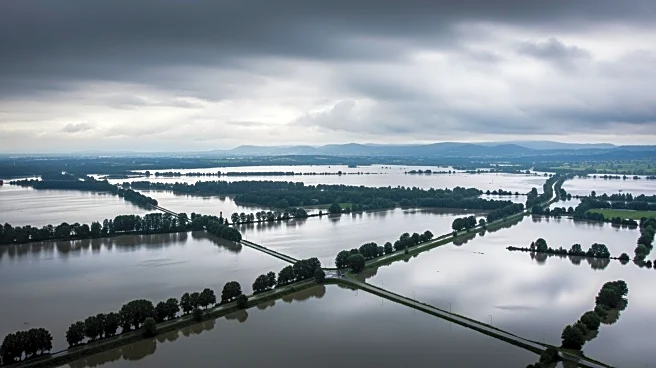
South Africa has declared a national disaster following severe flooding caused by torrential rains in the northern regions of the country. The declaration, made by the head of the National Disaster Management Center and announced by the government, allows
for a coordinated national response to the disaster. The flooding has resulted in at least 30 fatalities, significant damage to infrastructure, and the displacement of numerous residents. The worst-affected areas include the provinces of Limpopo and Mpumalanga, with additional impacts reported in three other provinces. The heavy rains have also affected neighboring countries Mozambique and Zimbabwe, contributing to over 100 deaths across the region since the onset of the rains late last year. The Kruger National Park, a major tourist attraction, was temporarily closed due to the flooding but is set to reopen after evacuating over 300 tourists and staff.
Why It's Important?
The declaration of a national disaster in South Africa underscores the severe impact of climate-related events on infrastructure and human lives. The flooding has caused extensive damage, estimated at $240 million in Limpopo province alone, highlighting the economic strain on affected regions. The situation also emphasizes the vulnerability of infrastructure in the face of extreme weather events, which are becoming increasingly frequent due to climate change. The coordinated response enabled by the disaster declaration is crucial for effective relief efforts and rebuilding. The international community's attention to such events may also prompt increased support and collaboration in addressing climate resilience and disaster preparedness.
What's Next?
In the aftermath of the disaster declaration, South Africa is expected to intensify its relief and recovery efforts. This includes continued search and rescue operations, infrastructure repair, and support for displaced individuals. The reopening of the Kruger National Park will be closely monitored as it is a significant source of tourism revenue. The government may also seek international assistance to bolster its response capabilities. Additionally, there could be increased discussions on improving infrastructure resilience and implementing long-term strategies to mitigate the impacts of future climate-related disasters.
Beyond the Headlines
The flooding in South Africa highlights broader issues related to climate change and its disproportionate impact on vulnerable regions. The repeated occurrence of such disasters raises questions about the adequacy of current infrastructure and disaster preparedness measures. It also brings attention to the need for sustainable development practices that prioritize environmental resilience. The situation may prompt policy discussions on climate adaptation and the role of international cooperation in supporting affected countries. Furthermore, the human toll of the disaster underscores the importance of community-based approaches to disaster risk reduction and recovery.