



What's Happening?
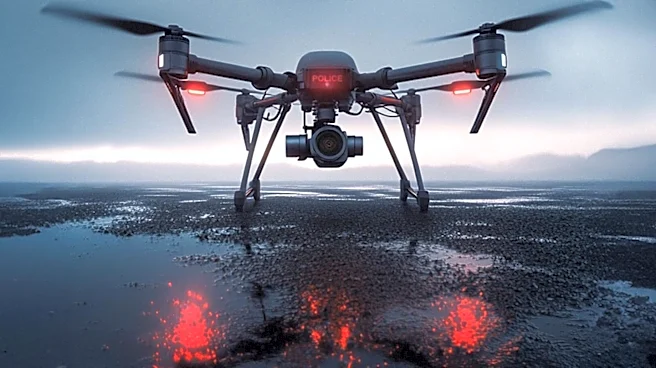
Commercial drones are increasingly being weaponized, presenting new national security challenges for U.S. law enforcement and federal agencies. Dan DeBree, an associate professor at Texas A&M University’s Bush School of Government and Public Service,
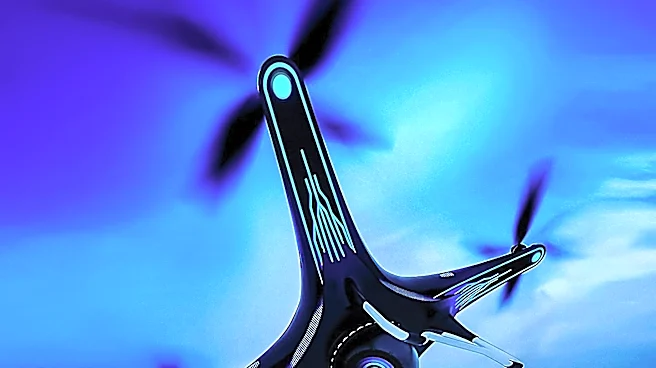
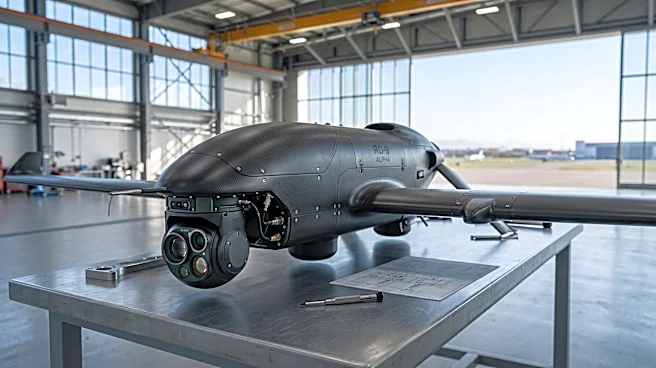
describes this trend as the 'democratization of air power.' Inexpensive commercial quadcopters can be easily modified into weapons using readily available online resources, a practice observed in conflicts like Ukraine and by non-state actors such as drug cartels and domestic terrorists. Advances in drone autonomy, particularly AI-driven models that can operate without human intervention or communication, make detection and countermeasures more difficult. While law enforcement uses drones for surveillance in situations like hostage crises, the rapid evolution of drone technology necessitates continuous development of new countermeasures.
Why It's Important?
The proliferation of weaponized commercial drones significantly escalates domestic security risks. The ease with which these devices can be acquired and modified means that individuals or small groups can pose threats previously limited to state actors. This 'democratization of air power' challenges traditional security paradigms, requiring substantial investment in counter-drone technologies and strategies. The Safer Skies Act, passed in December 2025, reflects the federal government's recognition of this threat and its efforts to empower local law enforcement. The ongoing 'cat-and-mouse game' between drone technology and countermeasures impacts national security, public safety, and the operational strategies of U.S. law enforcement agencies, potentially leading to new regulations and technological arms races.
What's Next?
Security agencies will need to continuously adapt to the rapid advancements in drone technology, which typically sees new iterations and countermeasures emerge within a six-month cycle. This will involve ongoing research and development into detection, interception, and neutralization technologies for autonomous and fiber-optic-controlled drones. Legislative efforts, similar to the Safer Skies Act, may continue to expand authorities for responding to drone threats. Furthermore, there will likely be increased collaboration between federal and local law enforcement to share intelligence and best practices for countering these evolving dangers. Training for law enforcement will also need to incorporate strategies for dealing with weaponized drones in various scenarios, including hostage situations.
Beyond the Headlines
The rise of weaponized commercial drones raises profound ethical and legal questions regarding surveillance, privacy, and the use of force. The ability of AI-driven drones to operate autonomously without human input blurs the lines of accountability and control, posing challenges for international law and domestic policy. The accessibility of this technology also highlights the dual-use dilemma, where innovations designed for civilian purposes can be repurposed for malicious intent. This trend could lead to a re-evaluation of airspace regulations, public surveillance policies, and the balance between security and civil liberties in an increasingly drone-filled environment. The potential for 'lone wolf' actors to utilize such technology also underscores the need for community vigilance and intelligence gathering.