


What's Happening?
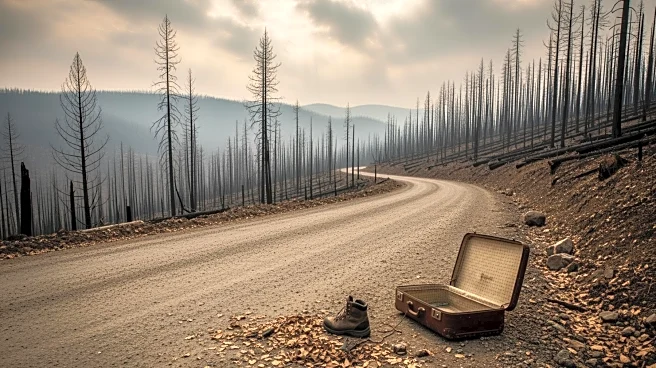
The Eaton and Palisades fires in Southern California have left thousands of residents displaced, with many still struggling to find stable housing a year after the disaster. The fires destroyed numerous homes, forcing residents to move frequently in search
of temporary shelter. A survey by the Department of Angels, a nonprofit organization, found that a significant portion of those displaced are still in temporary housing, with many expecting to move again soon. The displacement has led to a complex pattern of migration, with most individuals staying within California but some relocating to other states. The emotional and financial toll of the displacement has been significant, with many residents experiencing worsened mental health as a result of the instability.
Why It's Important?
The displacement caused by the Eaton and Palisades fires highlights the ongoing challenges faced by communities affected by natural disasters. The lack of stable housing options exacerbates the trauma experienced by those who have lost their homes, leading to long-term mental health issues. The situation underscores the need for effective disaster response and recovery strategies that prioritize housing stability and mental health support. Additionally, the fires have prompted discussions about the resilience of infrastructure and the importance of preparing for future climate-related events. The experiences of those displaced by the fires could inform policy decisions aimed at improving disaster preparedness and response in California and beyond.
What's Next?
As the displaced residents continue to navigate their housing challenges, there is a need for increased support from government and nonprofit organizations to facilitate long-term recovery. Efforts to rebuild homes and infrastructure in affected areas are ongoing, but the process is slow and complex. Policymakers may need to consider new approaches to disaster recovery that address both immediate needs and long-term resilience. The experiences of those affected by the fires could also lead to changes in building codes and land use planning to reduce the risk of future disasters.